.avif)
Most workforce systems focus on what employees do. They track output, attendance, productivity, performance metrics, or task completion.
But many organizational issues do not begin in the visible output layer. They begin in the trust layer: credibility gaps, hidden leadership, morale concentration, social fragmentation, respected employees being overlooked, or influence moving through people who do not appear on the formal org chart.
When leadership cannot see that layer, decisions are madefrom incomplete visibility.
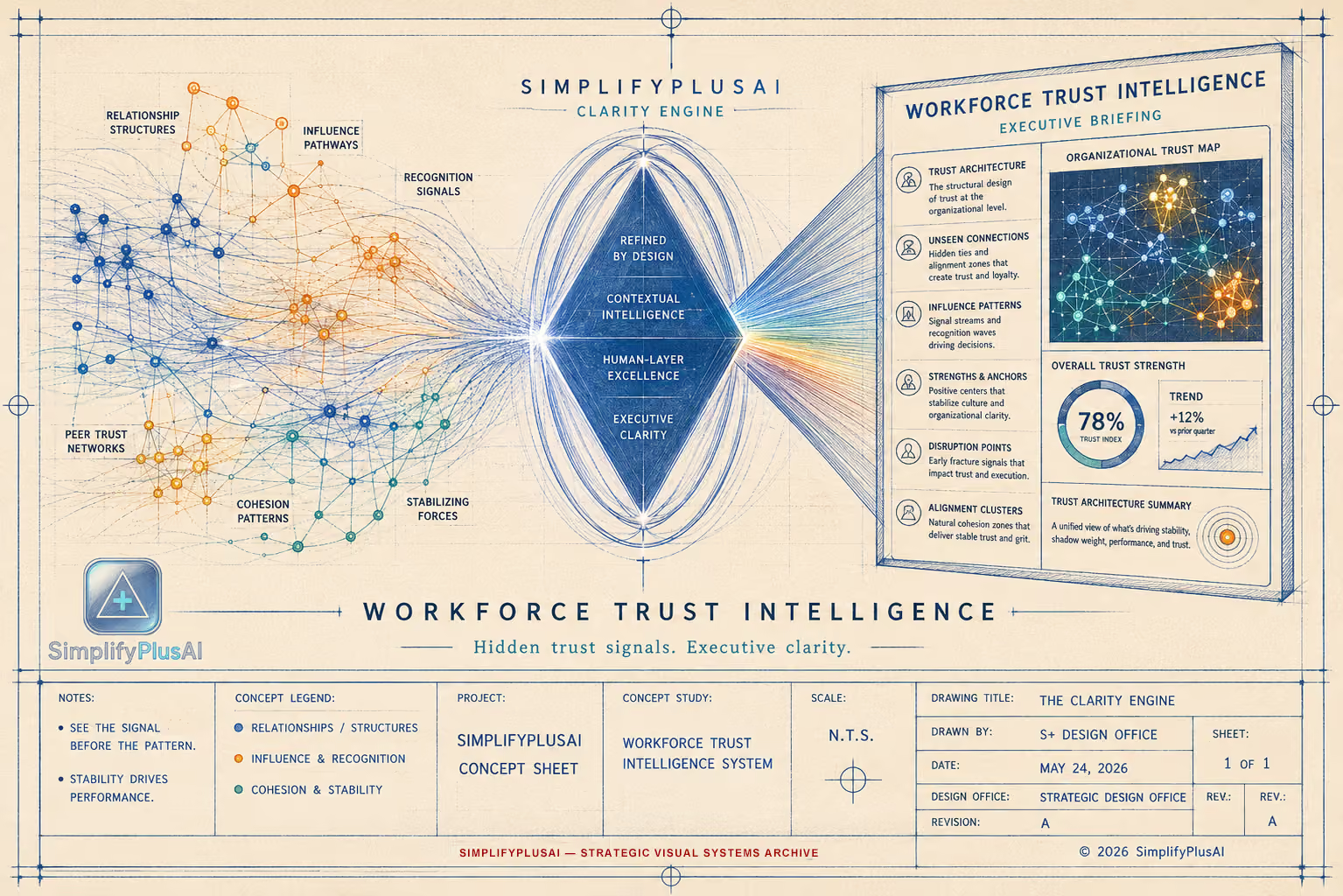
Workforce Trust Intelligence™
High-performing organizations are not built on performance visibility alone. They are built on trust visibility.
Most organizations can see job titles, reporting lines, KPIs, and formal performance outputs. What they often cannot see is the human trust layer underneath the operation: who people rely on, who stabilizes teams, who carries influence, and where credibility actually lives inside the workforce.
Workforce Trust Intelligence™ helps make those hidden organizational dynamics visible through peer-driven recognition telemetry and executive-level interpretation.
This is not social scoring. This is organizational signal extraction. WTI does not publish rankings, popularity scores, or public employee comparisons. Results remain confidential and are used to help leadership understand trust, cohesion, influence, and hidden stabilization patterns more accurately.
The Problem
What WTI Makes Visible
01
Who the workforce consistently respects and supports
02
Where hidden leadership is emerging before formal promotion paths recognize it
03
Which employees may be stabilizing teams beyond their official title
04
Where trust, cohesion, or peer credibility is concentrated
05
Where social fragmentation or morale instability may be developing
06
How recognition events affect workforce perception over time
07
Where formal hierarchy may not match actual workforce trust dynamics.
Why It Matters
A team can look stable on paper while trust is weakening underneath. A department can meet output targets while the people who hold the group together remain invisible. A future leader can be earning peer confidence long before leadership has a formal reason to notice.
WTI gives leadership a clearer view of the human layer behind performance, culture, retention, and team stability.
The goal is not to turn trust into a contest. The goal is to help leadership see the organizational signals that usually stay hidden until they become expensive problems.
A Simple Recognition Signal Can Reveal More Than Recognition
WTI may begin with something that looks simple from the outside: peer-driven recognition input. But the value is not the vote itself. The value is the pattern that forms over time.
When recognition telemetry is interpreted correctly, it can reveal trust concentration, rising influence, hidden stabilizers, workforce credibility, and changes in how employees perceive one another.
That is where WTI becomes different from ordinary employee recognition. It does not treat recognition as an event. It treats recognition as an organizational signal.
What This System Is Not
01
It is not a popularity contest.
02
It is not employee surveillance.
03
It is not social scoring.
04
It is not public ranking.
05
It is not gamified engagement fluff.
06
It is not a morale gimmick.
07
It is not a replacement for human judgment.
WTI is designed to preserve dignity, signal quality, and organizational trust. That is why results are kept private, interpreted carefully, and delivered as executive intelligence rather than public employee comparison.
What Leaders Receive
A WTI review can translate peer-driven recognition and workforce trust signals into executive-ready intelligence without exposing employees to public scoring or workplace politics.
Workforce Trust Dashboard™
01
Hidden leadership and stabilizer identification
02
Influence and cohesion pattern review
03
Recognition impact analysis
04
Trust trajectory and momentum reporting
05
Confidential executive interpretation
06
Privacy-first guardrails and no-public-ranking rules.
06
How WTI Fits With WSS
Workforce Stability System™ measures operational stability: reliability, consistency, accountability, workforce normalization, and volatility reduction.
Workforce Trust Intelligence™ measures the human trust layer: influence, cohesion, hidden leadership, workforce credibility, social stabilization, and peer confidence.
Together, leadership can see both the operational layer and the human layer. That combination is where the larger Workforce Visibility Systems platform becomes especially powerful.


.png)