
AI Slop Is Not an Aesthetic Problem. It Is a Trust Problem
ARTICLE OVERVIEW
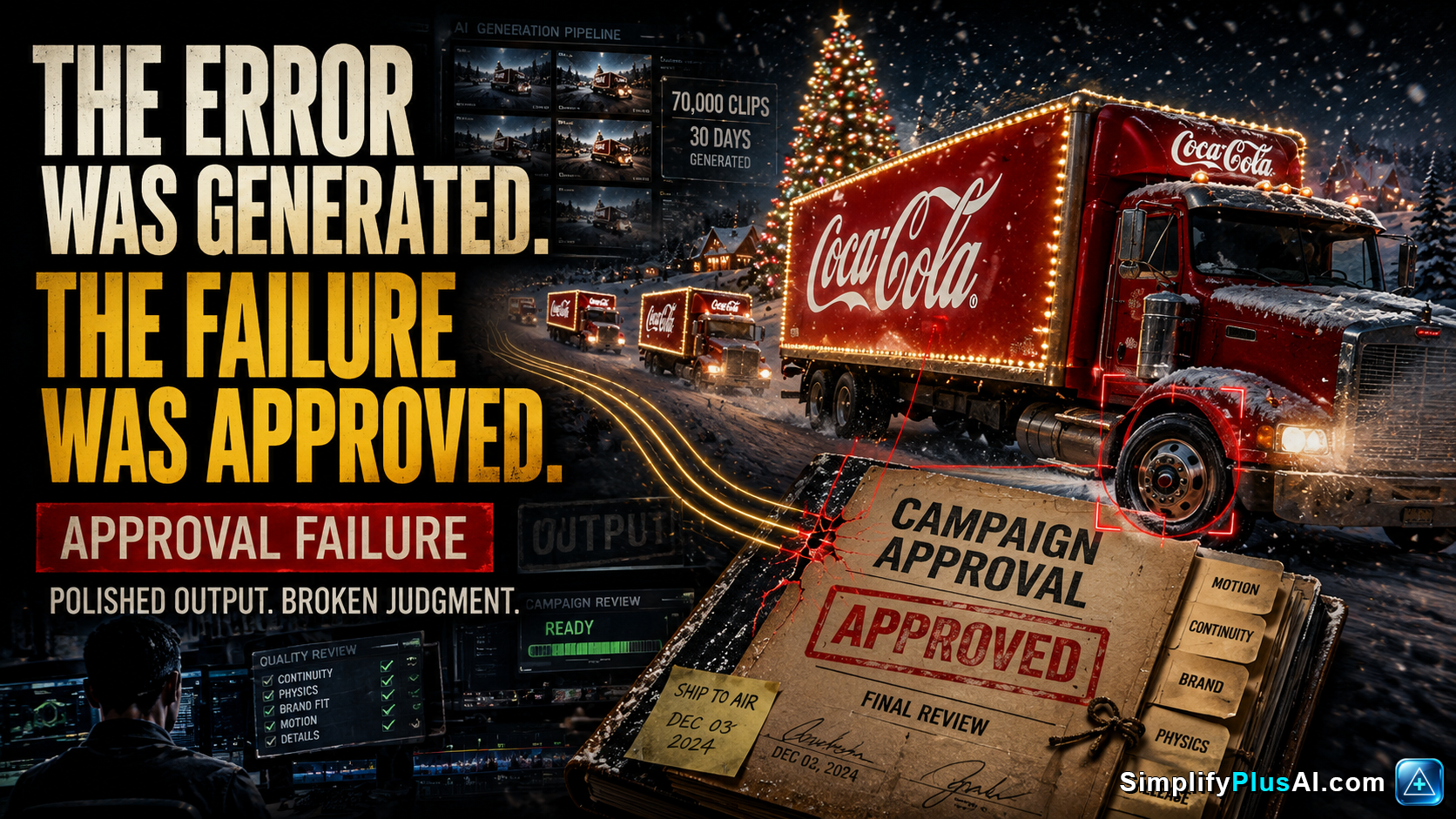
Coca-Cola’s AI-generated holiday campaign looked polished enough to carry one of the most recognizable advertising traditions in the world. Yet viewers noticed trucks that appeared to glide instead of roll, faces that looked synthetic, and continuity errors that changed the vehicles from shot to shot. The visible mistakes were small. The decision to approve them was not. The public was not judging the model; it was judging the company whose name appeared on the finished work.
That distinction defines AI slop more accurately than malformed hands or misspelled signs. AI can generate beautiful work as easily as ugly work. Slop begins when visual polish convinces an organization that production is complete before anyone has confirmed accuracy, continuity, brand identity, emotional fit, physical plausibility, and evidence integrity. Cosmetic slop distracts. Communication slop confuses. Identity slop damages the subject. Evidence slop misleads. Systemic slop tells the audience the business has no reliable quality gate.
The production economics make the risk worse. Coca-Cola said five AI specialists generated and refined roughly 70,000 clips in 30 days for its 2025 campaign. Generation became fast, but review remained human, finite, and vulnerable to fatigue. Thousands of outputs are not thousands of units of value; they are thousands of candidates that still require selection, comparison, legal inspection, brand review, continuity checks, and final approval. AI does not remove the work. It relocates the work into evaluation.
The broader examples show that technical defects are only one part of quality. McDonald’s Netherlands produced a holiday campaign whose cold synthetic tone collided with the warmth audiences expect from Christmas advertising. Toys“R”Us still required prompting, corrective visual effects, editing, sound, and approval after using generative video. By contrast, Nike’s Serena-versus-Serena project and Heinz’s A.I. Ketchup campaign used AI to make the underlying concept possible. The dividing line is whether the technology expands the idea or merely lowers the production burden.
Trust is lost before many viewers can explain exactly what feels wrong. Provenance systems, labels, metadata, and Content Credentials can show where an asset came from, but they cannot determine whether a logo is wrong, a face is recognizable, the physics make sense, or the emotional promise fits the brand. A mature workflow therefore needs a publish gate stricter than “looking finished.” AI slop does not begin when the machine makes a mistake. It begins when the business decides the mistake is good enough to publish.

Complete In-Depth Analysis
The Truck Moved. The Wheels Did Not.
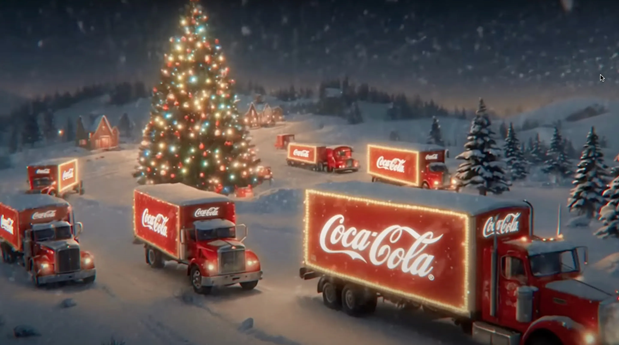
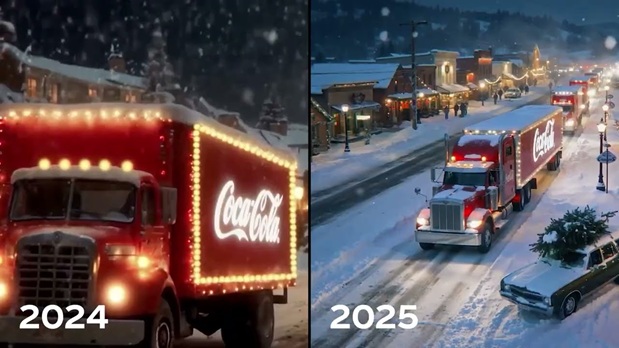
The red holiday truck moved through the snow exactly where memory expected it to be. The lights glowed, the music carried the familiar promise, and the campaign reached for the emotional territory Coca-Cola has owned for decades. Then the wheels exposed the entire production. In the company’s 2024 AI-generated holiday advertising, viewers noticed trucks that appeared to glide instead of roll and human faces that looked unsettlingly synthetic. Coca-Cola returned in 2025 with an updated version. The wheels moved more convincingly, but the trucks changed shape between shots and appeared to gain or lose wheels as the scene progressed.
The defects were small enough to sound petty when listed one at a time. A wheel. A face. A continuity error. Yet that is precisely why the campaign matters. One of the world’s most sophisticated marketing organizations had used generative technology to recreate one of its most trusted brand traditions, and the final work contained mistakes that ordinary viewers could detect without special training. The audience was not evaluating the model. It was evaluating Coca-Cola’s decision to approve what the model produced.
That distinction is the real story behind AI slop. The problem is not simply that artificial intelligence can create ugly images. It can also create beautiful ones. The problem begins when visual polish convinces an organization that the work is finished before anyone has determined whether it is accurate, faithful, coherent, emotionally appropriate, or worthy of the trust attached to the company’s name. AI slop is not an aesthetic category. It is the visible residue left when generation capacity outruns judgment.
The Wrong Definition of Slop
The common definition of AI slop is easy to recognize: too many fingers, broken teeth, misspelled words, melted objects, impossible shadows, and people whose faces seem to change while the camera is still looking at them. Those failures are real, but they have become a distraction from a more important danger. The most consequential slop may look expensive. It may have cinematic lighting, clean color, rich detail, and the smooth finish of a completed campaign while failing the purpose for which it was created.
A strange hand in the corner of an entertainment image is a cosmetic defect. A wrong logo is an identity failure. A generic composition that cannot communicate at thumbnail size is a communication failure. A synthetic customer presented as a real customer becomes an evidence failure. A campaign that repeatedly allows these mistakes through approval reveals a systemic failure. Treating all of them as the same problem produces shallow analysis because the business risk depends on what the visual was supposed to accomplish or prove.
The five levels matter. Cosmetic slop distracts. Communication slop confuses. Identity slop damages the subject. Evidence slop misleads. Systemic slop tells the audience that the organization has no reliable quality gate. The first level may create a joke. The fifth can change how customers interpret everything else the company says.
Seventy Thousand Clips and One Approval Gate
Coca-Cola’s 2025production makes the operational problem unusually clear. The company’s behind-the-scenes material said five AI specialists generated and refined roughly 70,000 video clips in 30 days. Reporting placed the larger group involved in the campaign at around 100 people. The technology dramatically compressed a process that traditionally began many months earlier, but it did not eliminate production. It flooded the production system with options.

Seventy thousand clips are not 70,000 units of value. They are 70,000 candidates that require selection, comparison, continuity review, brand review, physical plausibility checks, editing, legal inspection, and final approval. Generation became cheap and fast. Evaluation remained human, finite, and vulnerable to fatigue. The more finished-looking material a team receives, the easier it becomes to confuse abundance with quality and movement with progress.
This is where many organizations misunderstand the economics of generative AI. They calculate the time saved in creation but fail to price the burden transferred to review. The model can produce more options than a team can meaningfully inspect. Similar outputs desensitize reviewers. Responsibility fragments across the model, the operator, the agency, the editor, and the client. Everyone touches the asset, but no one fully owns the failure until the public sees it. At that moment, the responsibility becomes simple. The audience sees the logo of the business that published the work.
The Campaign Can Perform and Still Lower the Standard
The Coca-Cola example becomes more useful when the easy conclusion is removed. The campaign was not necessarily a commercial disaster. Testing cited in industry reporting found strong attention and brand recall, while another measure gave the 2025holiday work a very high long-term growth score. Coca-Cola’s imagery is distinctive, the trucks are deeply familiar, and the campaign may have continued to trigger recognition and purchase intent even among people who disliked the execution.
That contradiction is not a reason to dismiss the criticism. It is the most important warning in the case. A defective asset can still perform. Strong brand equity can carry weak craftsmanship. Familiar music, colors, symbols, and distribution can overcome visible errors in the short term. The danger is that acceptable metrics teach the organization the wrong lesson: consumers noticed the brand, therefore the quality was good enough.
Short-term effectiveness and long-term standard erosion can coexist. A company can save time, achieve recall, move product, and still train itself to accept work it would once have rejected. Once consumer tolerance becomes the approval standard, quality no longer means that the artifact is right. It means that the artifact was not damaging enough to stop the transaction.
Brand Fit Is Part of Quality
McDonald’s Netherlands demonstrated a different failure in its 2025 holiday advertisement. The campaign portrayed December as the most terrible time of the year, filling the screen with stressful and uncanny holiday mishaps before offering McDonald’s as an escape. The work was removed after a rapid backlash. Critics objected to the artificial imagery, but the deeper problem was emotional positioning. A major consumer brand used a cold synthetic execution to sell relief from a season built around warmth, familiarity, and human connection.
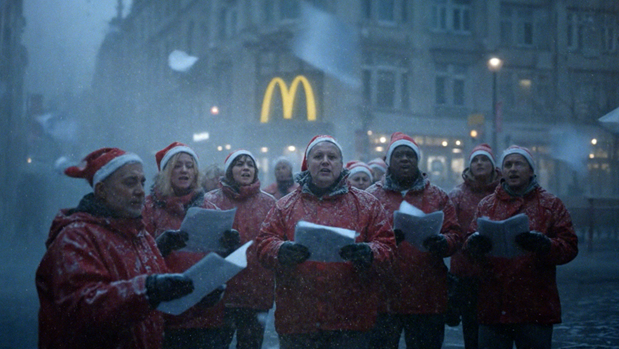
The creators could reasonably argue that holiday stress is real and that the campaign was attempting dark humor rather than sentimentality. Human effort also remained present; generative tools did not independently conceive, edit, and distribute the advertisement. But good intentions and technical ambition do not settle the brand-fit question. The customer encounters the emotional product, not the production explanation. When the tone contradicts the meaning the audience expects from the moment, the campaign can feel wrong even before the viewer identifies a single malformed face.
This is why visual judgment cannot be reduced to defect detection. An image may contain no obvious anatomical error and still betray the brand. The colors can be correct, the logo can be accurate, and the edit can be smooth while the emotional promise is completely miscalibrated. Quality includes whether the work belongs to the company, the audience, and the occasion.
AI Does Not Remove the Work. It Relocates It.
Toys“R”Us promoted its Sora-generated origin film as a milestone in brand storytelling. The film used generative video to imagine a young Charles Lazarus dreaming of the store and Geoffrey the Giraffe. The company emphasized the speed with which hundreds of iterative shots could be reduced to a final set within several weeks. It also acknowledged corrective visual effects and an original score, while reporting described a production team and repeated revisions behind the final piece.

That does not make the project deceptive. It makes it instructive. AI did not eliminate the creative process. It moved the labor into prompting, selection, repair, compositing, sound, editing, and approval. The word generated can make the work sound automatic, but generation is only one stage. The farther the output is from the required source, identity, continuity, and emotional standard, the more human work returns downstream.
Businesses should not ask whether AI eliminates labor. They should ask where the labor reappears, who is qualified to perform it, and whether the revised workflow preserves accountability. A faster first draft is valuable only when the organization maintains enough judgment to recognize when it is still a first draft.
The Positive Cases Reveal the Dividing Line
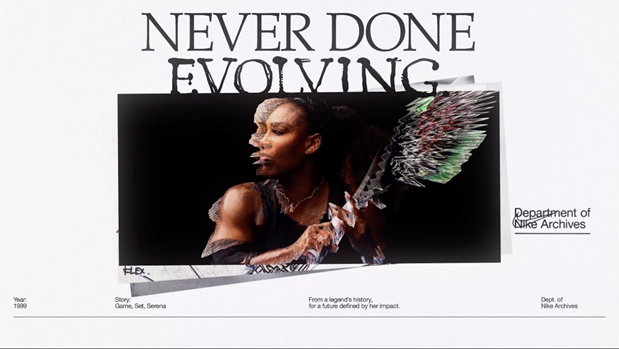
The strongest argument against lazy AI production is not a ban on AI. It is the existence of work in which the technology serves a real idea. Nike and AKQA’s Never Done Evolving campaign used archival footage, machine learning, and simulation to model a match between Serena Williams at two stages of her career. The project analyzed differences in decision-making, shot selection, recovery, reaction, and agility, then turned the data into a Serena-versus-Serena event. The technology did not replace the concept. It made the concept possible.
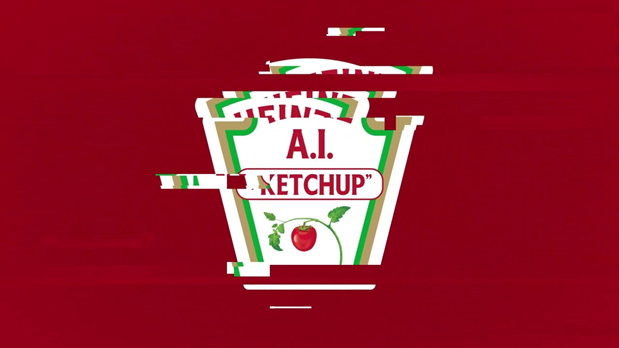
Heinz’s A.I. Ketchup campaign used a different mechanism. The brand asked image generators to depict ketchup and found that many results resembled the recognizable Heinz bottle and label architecture. AI became evidence for the campaign’s underlying claim: the visual idea of ketchup was so closely associated with Heinz that even a machine trained on culture reproduced the association. The strange generated images were not hidden defects. They were the point.
These examples clarify the dividing line. Audiences do not reject every use of AI because the technology is present. The better question is whether AI expands the meaning or merely reduces the production burden. When the technology produces an experience the idea requires, it can deepen the work. When it replaces an approach the brand already knew how to execute with greater care, the audience naturally asks what was gained besides speed.
Trust Begins Before the Viewer Can Explain the Defect
Kantar reported that 43 percent of consumers did not trust AI-generated advertising in its Marketing Trends 2025 research. In 2025, the share of people bothered by AI-generated advertising rose to 44 percent, while 57 percent expressed concern about fake generative-AI advertising. Those figures do not show universal rejection. They show a trust gap developing while marketers continue to adopt the technology for efficiency, experimentation, and scale.
The gap matters because formal detection is not required for distrust. A viewer may never identify the model, the prompt, or the exact artifact. The work can simply feel generic, over processed, emotionally empty, or strangely detached from the subject. That reaction is easy to dismiss because it is difficult to measure sentence by sentence. Yet brands have always depended on preconscious judgments: Does this feel credible? Does this company understand me? Did anyone care enough to get the details right?
The old defense was that most people would not notice. That is a dangerously low standard. A customer does not need to diagnose the error to experience the loss. Suspicion itself changes the relationship. Once viewers begin looking for the machinery, every face, testimonial, product image, and emotional claim inherits additional doubt.
Provenance Is Necessary. It Is Not Evaluation.
NIST has documented approaches for synthetic-content transparency that include provenance tracking, watermarking, metadata, labeling, and detection. The C2PAContent Credentials standard is designed to preserve verifiable information about how an asset was created and changed. These systems can help viewers understand origin and modification history, and they will become increasingly important as synthetic media becomes easier to produce and harder to identify.
But provenance and evaluation answer different questions. Provenance asks where the asset came from and what happened to it. Evaluation asks whether the asset is accurate, faithful, effective, and fit to publish. A Content Credentials label can disclose that AI helped create an image. It cannot determine whether the logo is wrong, whether the face is recognizable, whether the physics make sense, whether the emotional tone fits the audience, or whether a synthetic customer could be mistaken for real evidence.
Transparency can reduce deception. It cannot turn weak work into strong work. A clearly labeled failure remains a failure, and an undisclosed success may still create an ethical problem. The organization needs both origin controls and judgment controls.
The Publish Gate
A mature generative workflow needs a publication standard that is stricter than looking good at first glance. The business must confirm that the person, product, brand, setting, and source material remain accurate; that anatomy, motion, lighting, scale, reflections, and continuity make sense; that the intended message survives at full size, thumbnail size, and mobile size; and that logos, names, faces, typography, colors, and defining details are correct.
The review must also ask whether any synthetic element could be mistaken for real documentation. A fabricated customer, invented product result, or misleading before-and-after image carries a different risk from a decorative background. Someone other than the generator or prompt operator should inspect the asset because the person who spent hours creating it is often the least capable of seeing it freshly. Finally, the company should ask whether it would be comfortable explaining and defending every visible element in public.
That final question is the cleanest gate. If the business would be embarrassed to explain the image, it should not publish the image.
The Wheel Was Not the Failure
The Coca-Cola truck returns because it reveals the whole problem in one small movement. The model did not know that the wheel mattered. It did not know that the truck carried decades of holiday memory, that viewers understood its shape instinctively, or that one broken motion could make an expensive global campaign feel cheaper than the tradition it was borrowing from. The model was never responsible for knowing any of that.
The company was.
AI slop does not begin when the machine makes a mistake. It begins when the business decides the mistake is good enough to publish.
Source Notes
https://www.coca-colacompany.com/media-center/groundbreaking-digital-experience-and-films-fuse-holiday-heritage-with-cutting-edge-tech
https://www.coca-colacompany.com/media-center/coca-cola-refreshes-givers-of-the-season-embraces-ai-powered-storytelling-in-global-holiday-campaign
https://www.youtube.com/watch?v=Yy6fByUmPuE
https://www.youtube.com/watch?v=URT_pX74_qA
https://lbbonline.com/news/McDonalds-Netherlands-AI-Terrible-Truth-of-December
https://www.prnewswire.com/news-releases/toysrus-studios-and-native-foreign-use-openais-sora-to-narrate-the-origin-story-of-beloved-toyrus-brand-302180332.html
https://www.youtube.com/watch?v=ywxFszydgqY
https://www.akqa.com/work/nike/nike-50th-anniversary/never-done-evolving/
https://www.dandad.org/work/d-ad-awards-archive/ai-ketchup
https://www.youtube.com/watch?v=LFmpVy6eGXs
https://www.kantar.com/campaigns/marketing-trends-2025
https://www.kantar.com/north-america/company-news/us-media-reactions-2025
https://www.nist.gov/publications/reducing-risks-posed-synthetic-content-overview-technical-approaches-digital-content
https://c2pa.org/


.png)