
Cracker Barrel CEO Fired by America. Then Paid to Leave.
ARTICLE OVERVIEW
When Glenn Beck asked Julie Masino whether she was surprised Cracker Barrel had not fired her, she answered, “I feel like I’ve been fired by America.” Eight months later, the company announced that she will lose the CEO role and her board seat on August 10, remain briefly for the handoff, and leave in October. Her transition agreement includes $4.635 million over two years, an FY2026 performance-based bonus, equity treatment, a release of claims, and continuing confidentiality obligations. The company calls it succession; the record shows a paid, controlled removal of the executive who had become inseparable from a public failure.
Cracker Barrel had real problems to solve. Its stores needed maintenance, dinner traffic needed attention, some guests wanted more comfortable seating, and the company had food, service, and execution issues that predated the logo crisis. Modernization was not automatically wrong. The failure was that the company translated practical customer complaints into a broader transformation that appeared to treat the brand’s accumulated identity as excess material waiting to be simplified.
That misread became impossible to hide in August 2025. Masino told Good Morning America that feedback on remodels had been “overwhelmingly positive,” but the new text-only logo quickly triggered a broad customer revolt. Cracker Barrel restored the Old Timer logo within roughly a week and suspended the remodel program the following month. In her later Beck interview, Masino identified the deeper failure herself: the company had not understood how customers saw themselves in the logo. It had data, consultants, capital, and a board-backed plan involving brand work, store redesign, menu changes, digital growth, and as much as $700 million in planned investment; it had simply measured the wrong thing.
The logo was not the entire problem, but it became the receipt for everything customers believed had been slipping. Cracker Barrel’s own operations leadership described years of frustration with food execution, service, waits, and menu changes, which made the visual overhaul feel less like an isolated mistake and more like proof that the company no longer understood what it was supposed to protect. The board cannot turn that collective failure into one disposable face: it approved the transformation architecture, capital allocation, and investment posture, then removed the CEO who became publicly responsible for the result.
America did not formally fire Julie Masino; customers cannot appoint CEOs or negotiate severance agreements. They can make a strategy impossible to defend by withdrawing trust from the person carrying it. Cracker Barrel’s customers did not reject better food, better chairs, or a future for the company. They rejected the assumption that the future required Cracker Barrel to stop recognizing itself.

When Glenn Beck asked Julie Masino whether she was surprised Cracker Barrel had not fired her, she did not challenge the premise or reach for a polished defense. “I feel like I’ve been fired by America,” she said. At the time, she was still CEO, still trying to explain a failed rebrand, and still apologizing for a public reaction that had become impossible to contain. The old logo had been restored, the remodel program had been suspended, and the executive who had defended the transformation was already admitting that the company had missed something fundamental.
On July 27, Cracker Barrel announced the formal corporate consequence. Masino will surrender the CEO role and her board seat on August 10, while David Deno takes both positions; she will remain an employee until October 9 to assist with the transition. Her agreement provides $4.635 million over two years, an FY2026 bonus tied to company performance, specified equity treatment, a release of claims, and continuing confidentiality and restrictive obligations. The company calls that succession, but the underlying record is plain: Cracker Barrel is replacing its chief executive, removing her from the board, and paying for an orderly separation after reversing the central visible elements of a strategy she had publicly defended.
That is the meaning behind Masino’s line about being fired by America. Customers did not appoint a replacement CEO or negotiate a transition agreement, but they did something more consequential than criticism: they withdrew trust from the executive carrying a strategy they believed was changing the company into something less recognizable. Masino did not fail merely because she changed a logo. She failed because she became the face of a board-approved transformation that misread the product, misread the customer, and then misread the warning signs once customers began explaining the error in public.
The Statement That Could Not Survive Its Own Reversal
The public contradiction began on Good Morning America in August 2025. Cracker Barrel had introduced a text-only logo that removed the Old Timer figure and the barrel, while also testing brighter, less cluttered store interiors, altered layouts, new seating, and a more contemporary version of the familiar country-store environment. Masino told GMA that feedback on the remodels had been “overwhelmingly positive,” said customers liked what the company was doing, and described managers asking when their stores could join the remodel list. The company was not simply promoting a campaign; it was making a public claim that it had read the customer response correctly.
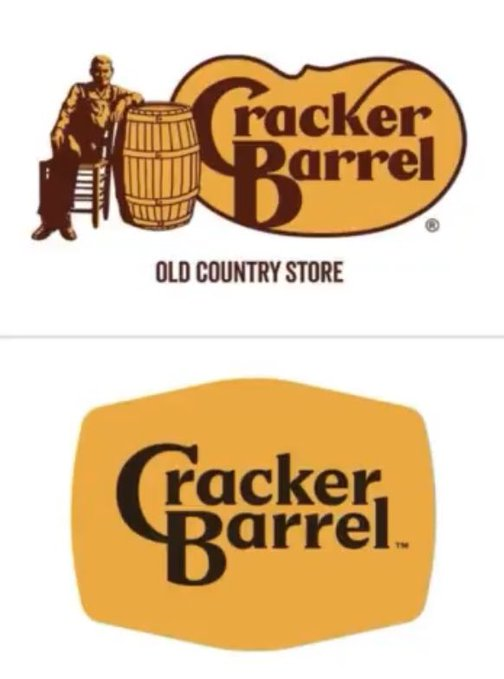
That claim collapsed quickly because customers did not see a harmless design refresh. They saw the Old Timer disappear, the barrel disappear, and the visual language of the company flattened into something cleaner and more generic. Executives may have seen simplification, but customers saw a company sanding down the specific thing they had spent decades choosing. Cracker Barrel restored the old logo within roughly a week, then suspended the remodel program the following month, which made clear that the response had reached far beyond one piece of artwork.
The reversal turned a branding dispute into a credibility failure. A company can withstand customers disliking a new visual identity, particularly if management believes the criticism will fade. It cannot easily withstand publicly describing the feedback as overwhelmingly positive, then reversing the identity and halting the physical program that surrounded it. The contradiction was not merely embarrassing for Masino; it became evidence that leadership had failed to understand the product it was trying to modernize.
The Logo Was the Receipt, Not the Whole Purchase
The weakest explanation of the backlash is that customers got irrationally emotional about a logo. Cracker Barrel’s own senior operator supplied the stronger explanation in the Beck interview. Doug Hisel described years of accumulated frustration with menu changes, inconsistent food execution, slow service, long waits, and an operation that had drifted away from food and guest experience as its north star. The logo did not create every one of those problems, but it gave customers a single image through which they could understand all of them.
A customer can accept an occasional bad meal or a slow visit as an isolated disappointment. A customer can keep returning after a menu item disappears, service slips, or the kitchen fails to deliver consistently. But once the company removes Uncle Herschel and the barrel from the mark, those frustrations begin to connect. The customer no longer sees a series of separate mistakes; the customer sees a company that no longer understands what it is supposed to protect.
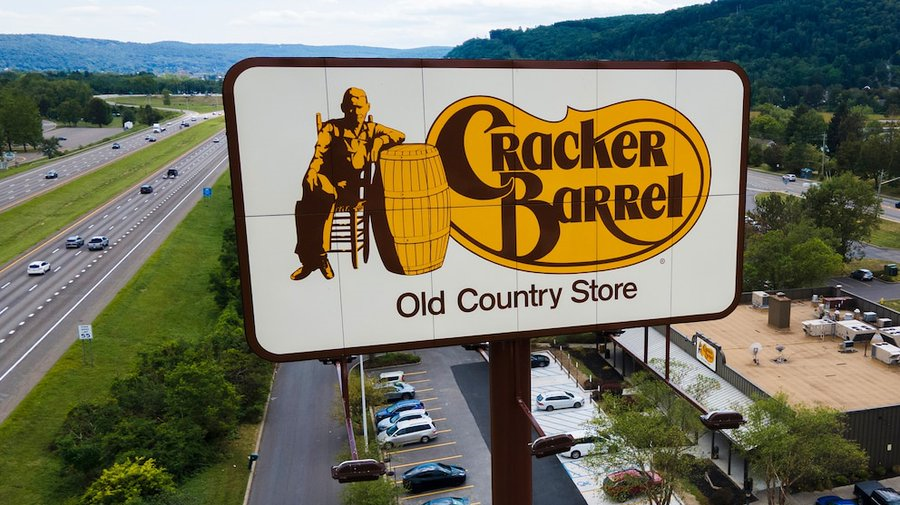
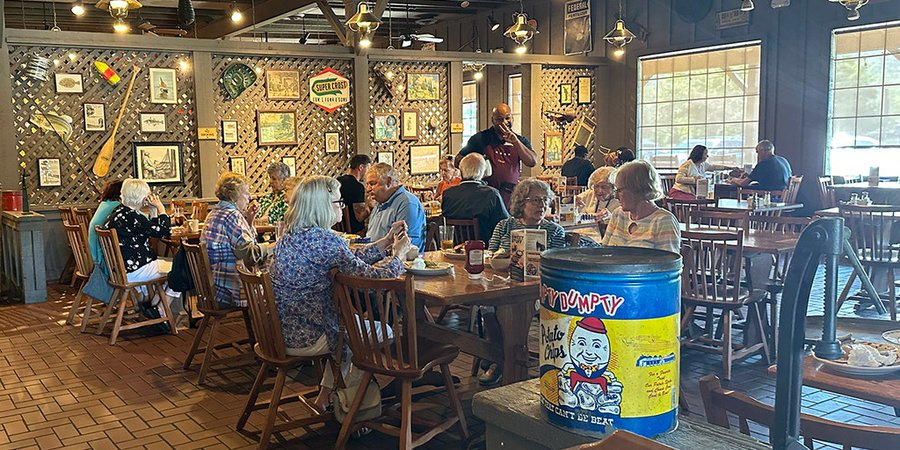
That is why the response was more serious than nostalgia. The Old Timer, the barrel, the antiques, the fireplaces, the country store, the rocking chairs, the peg games, the retail wall, and the brown-and-gold world around the meal were not merely decorative material surrounding the product. They were part of the product. Cracker Barrel sold food, but it also sold the feeling that the food was being served somewhere that still remembered what it was.
What the Data Failed to Measure
Masino’s most revealing statement came during the Beck interview, when she explained that the company had not understood how customers saw themselves in the logo. That admission identifies the real mechanism of the failure. Cracker Barrel had data, consultants, capital, test locations, and a formal strategy; what it lacked was a measurement system capable of recognizing emotional ownership. The company had analyzed comfort, relevance, traffic, execution, and growth, but it did not sufficiently analyze the relationship customers believed they had with the brand.
This was not a rogue CEO acting alone. In May 2024, Cracker Barrel announced a formal transformation plan built around refining the brand, optimizing the menu, evolving the store and guest experience, expanding digital and off-premise business, and elevating the employee experience. The company engaged a branding agency, planned 25 to 30 remodels in fiscal 2025, projected approximately $600 million to $700 million in capital expenditures across fiscal 2025 through 2027, and reduced the quarterly dividend to support the investment posture. It told investors that “our Board, our management, and our teams” were excited about the plan.
Several premises behind that plan were reasonable. Cracker Barrel had to care about aging stores, uncomfortable seating, dinner traffic, food execution, competition, labor pressure, and whether customers still saw value in the business. The failure came in translation: practical customer complaints were interpreted as permission to redesign the wider emotional environment of the company. A guest can want a better chair without wanting the room to stop feeling like Cracker Barrel, and a guest can want better food without wanting the business to resemble every other chain chasing a more contemporary customer.
The Board Cannot Turn a Collective Failure Into One Disposable Face
Masino owns executive responsibility because she was CEO, publicly defended the strategy, and claimed the response was positive while customers were already delivering a different verdict. The job carries extraordinary authority, visibility, and accountability, which is why chief executives are paid the way they are paid. She cannot separate herself from the decisions, the public statements, or the results simply because the board approved the broader architecture. No serious accountability article should treat her as an innocent messenger.
The board, however, cannot erase itself from the record by replacing her. It approved the transformation plan, the capital allocation, the dividend reduction, the investment horizon, and the theory that Cracker Barrel needed to become more relevant through a comprehensive redesign of how the company operated and presented itself. Boards do not choose every font or move every object inside a test store, but they approve the architecture that determines what executives are hired to build.
If that architecture produces a customer revolt, public reversals, severe financial pressure, and ultimately a CEO transition, the institution cannot honestly reduce the entire episode to one executive’s personal misadventure. Masino became the face of the failure because that is what CEOs become when a strategy collapses in public. But the person who carries a strategy is not always the person who designed, funded, and authorized the system behind it.
The Financial Record Made the Strategy Harder to Defend
Cracker Barrel had real operating challenges before the logo controversy, and the financial record should not be misused to suggest that every lost dollar came from removing the Old Timer. The company faced traffic pressure, food and service problems, competition, labor and cost pressures, and an aging physical footprint. Hisel’s own account makes clear that customers had been frustrated long before the logo became the symbol of their frustration.
The public reversal nevertheless arrived at a moment when the company could least afford a credibility crisis.
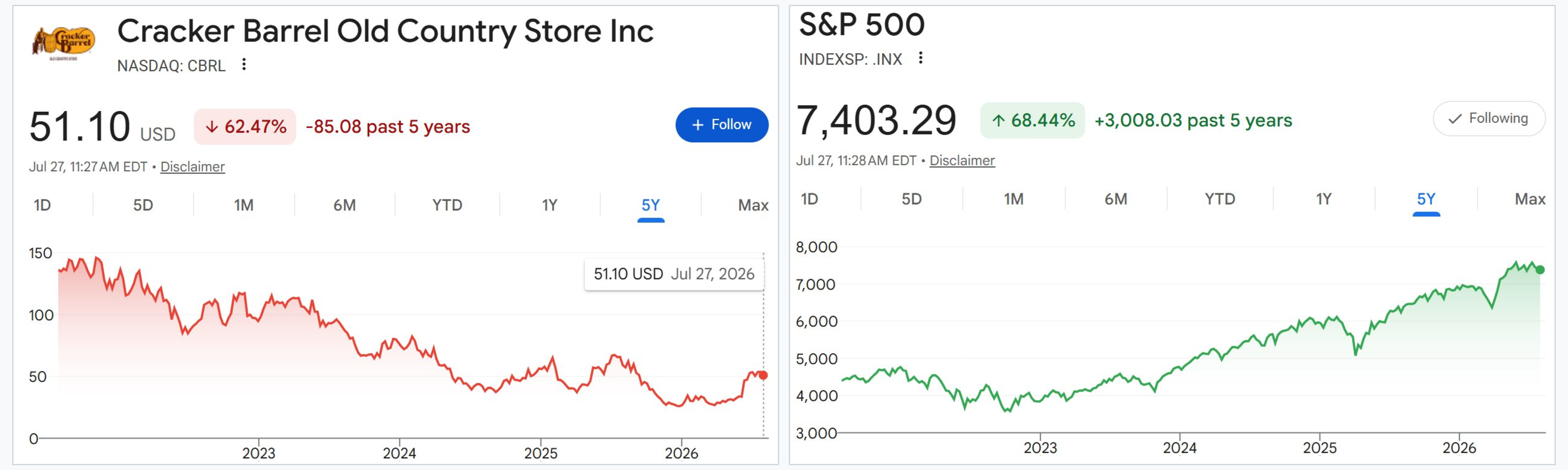
In the first quarter of fiscal 2026, revenue fell 5.7% year over year, comparable restaurant sales fell 4.7%, comparable retail sales fell 8.5%, and Cracker Barrel posted a $24.6 million GAAP loss. Adjusted EBITDA fell to $7.2 million from $45.8 million in the prior-year quarter, while the company sharply reduced full-year guidance.
Those figures do not prove that the logo caused every problem, but they show that Cracker Barrel no longer had the performance cushion required to defend a strategy customers had publicly rejected. The company later showed partial improvement, exceeding its own third-quarter expectations and raising guidance, although revenue was still down 2.9% year over year, comparable restaurant sales were down 2.6%, comparable retail sales were down 1.8%, and adjusted EBITDA remained below the prior-year period. The business was beginning to stabilize, but Masino’s ability to serve as the credible carrier of the strategy had not recovered.
What “Without Cause” Actually Means
Cracker Barrel’s filing says Masino’s transition terms are substantially consistent with a termination by the company without cause. That language should not be mistaken for a performance grade or a statement that nothing went wrong. “Without cause” is a contractual category, typically reserved for situations in which a company removes an executive without formally alleging conduct such as fraud, dishonesty, willful misconduct, fiduciary breach for personal profit, material policy violations, or continued willful failure after notice and an opportunity to cure.
A CEO can lose a job after misreading customers, losing confidence, failing to execute, and becoming an obstacle to recovery without the company formally alleging the type of conduct that strips negotiated severance and equity protections. Cracker Barrel agreed that Masino’s employment would end, removed her from the CEO role and the board, and provided a structured package that includes severance, bonus treatment, equity treatment, a release of claims, and confidentiality obligations. This was not a casual farewell or an ordinary voluntary departure; it was a negotiated separation designed to create finality and a controlled handoff.
That resolution allows the company to change the public face of the failure without publicly adjudicating every question of responsibility. Masino leaves. The company gets a new CEO. The old logo remains. The remodel program is gone. The board can present the episode as a transition rather than a public reckoning with the strategy it approved.
The New CEO Inherits More Than a Logo
David Deno’s real test is not whether he can preserve the restored logo. Cracker Barrel already did that. His test is whether the company can improve food, service, comfort, and execution without treating the customer’s emotional reason for choosing the brand as a problem to be designed away. The company must distinguish between refreshing a product and replacing the relationship customers believed they had with it.
Cracker Barrel’s customers did not reject better food, better chairs, or a future for the company. They rejected the assumption that the future required the company to stop recognizing itself. If the board treats the Masino exit as a complete solution rather than a warning about the strategy that produced it, the same instinct will return under cleaner language: optimization, relevance, modernization, guest experience, or long-term value creation.
Julie Masino said she felt fired by America. The public record now supplies the rest of the sentence: America rejected the strategy in public, and Cracker Barrel then paid to remove the executive who had become inseparable from it.

Sources and Evidence
- Cracker Barrel strategic transformation and capital-allocation announcement, May 16, 2024
- Julie Masino’s GMA interview and reporting on “overwhelmingly positive” feedback, August 2025
- Glenn Beck interview with Julie Masino and Doug Hisel, November 2025
- Cracker Barrel’s suspension of remodels, September 2025
- Cracker Barrel FY2026 first-quarter results
- Cracker Barrel FY2026 third-quarter results
- Cracker Barrel Form 8-K, July 27, 2026
- Julie Masino Transition Agreement
Corrections and Accuracy
If you notice a factual error or inaccuracy in this article, please notify us at contact@simplifyplusai.com. We will review the information and update the article where appropriate.


.png)