That is why the “why didn’t a blue blood hire him?” question still matters even if some of the answers are defensible. Before Indiana, Cignetti had never managed a Power Four booster ecosystem. He had not recruited as a head coach at the top of the sport. JMU was already a strong program. His age was a real consideration. A president or athletic director could reasonably worry about whether his style would translate upward. Nobody has to pretend every school was negligent for passing on him in every cycle.
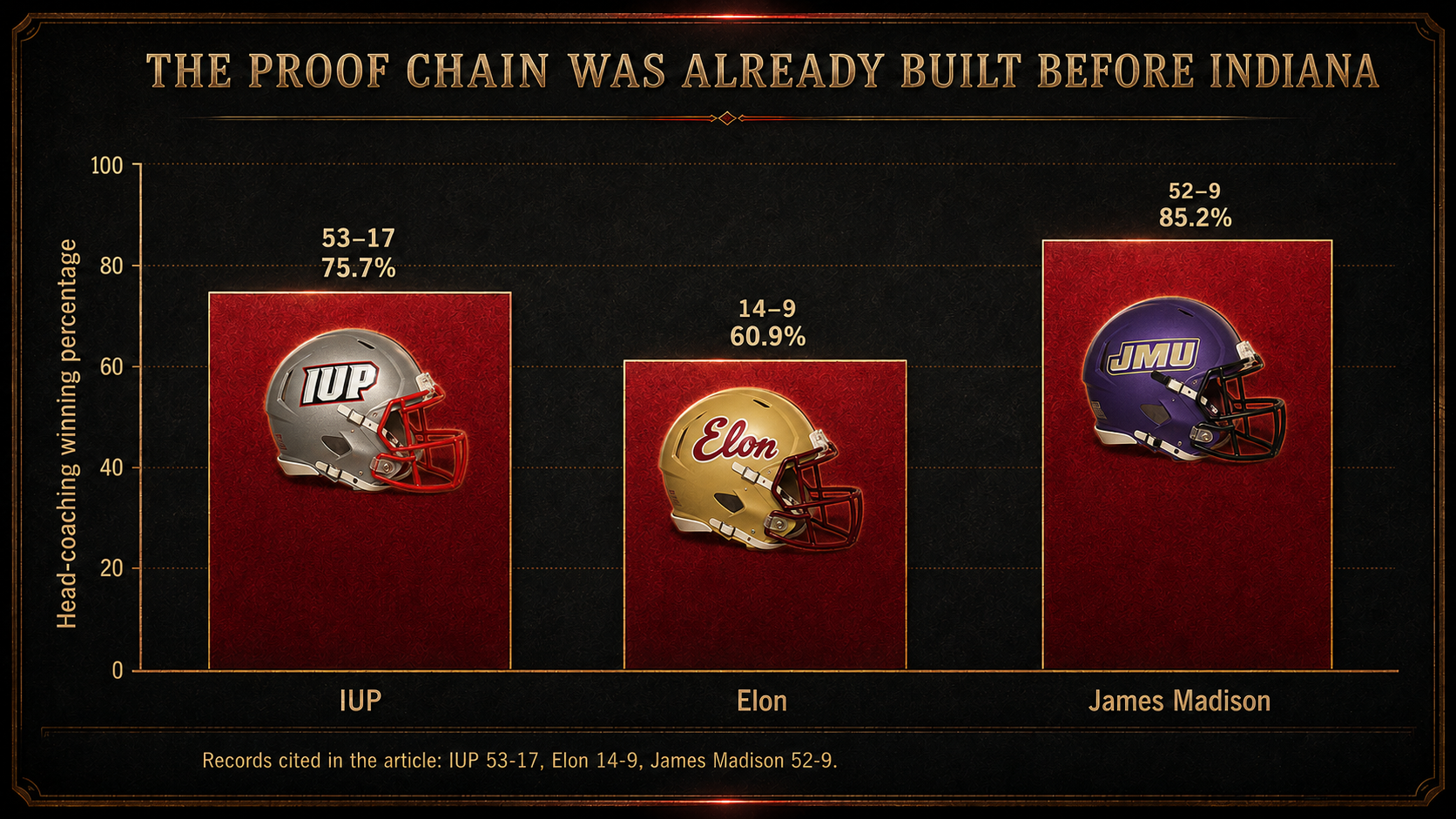
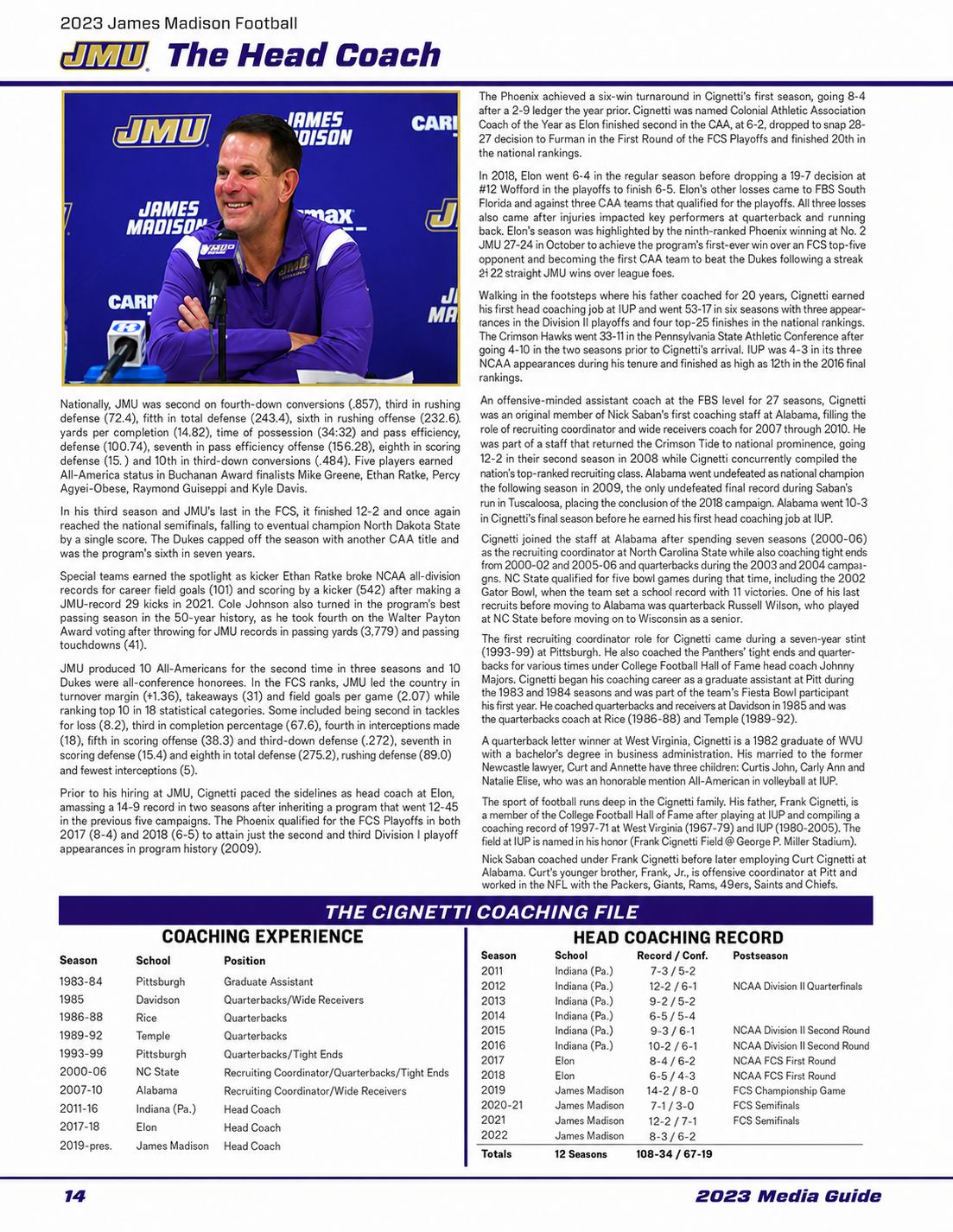
But those reasonable concerns get weaker with every stop on the résumé. They get weaker after Elon. They get weaker after JMU’s 52–9 run. They get weaker after the FBS transition. They get weaker when schools are simultaneously hiring first-time head coaches, coordinator projections, recruiter profiles, and recycled names. At some point, caution stops looking like discipline and starts looking like a broken filter.
That is the harshest lesson in the Cignetti story. College football did not lack information. It lacked the courage or clarity to weight the information correctly.
The sport does this all the time. It says it wants culture, then hires a scheme. It says it wants leadership, then hires proximity. It says it wants a program CEO, then hires a coordinator who has never owned the full building. It says it wants a winner, then discounts the winner because the winner came from the wrong level, the wrong age bracket, the wrong personality type, or the wrong media package.
Cignetti forced the sport to look at that contradiction.
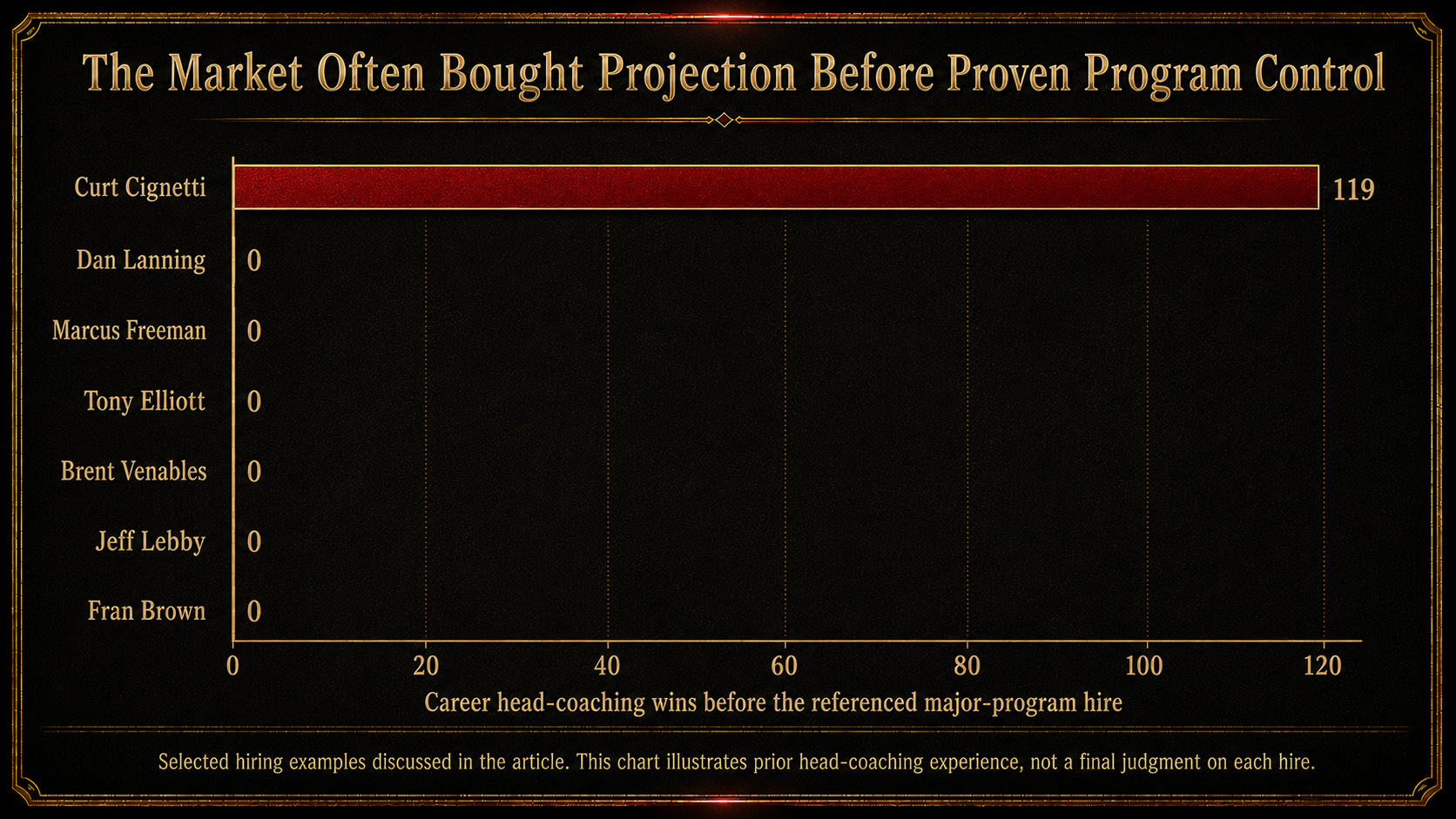
He also forces a cleaner comparison with coaches like Lane Kiffin. Kiffin is not a fraud. He is a gifted offensive coach, a real program figure, and a market force for a reason. But his career shows what the sport knows how to buy: brand, offense, confidence, SEC familiarity, television value, and repeated market re-entry. Cignetti’s career shows what the sport struggles to buy: accumulated proof without glamour.
Kiffin was a brand with proof attached. Cignetti was proof without the brand.
Major programs usually buy the brand first.
Indiana bought the proof first.
That sentence is why this story matters beyond Indiana, beyond Saban, beyond one coach’s late rise. Cignetti is a test case in decision quality. He shows how elite organizations can miss obvious value when the value does not arrive in the expected form. He shows how hiring systems can become addicted to signals adjacent to performance. He shows how a candidate can be too proven to ignore and still too strangely packaged to trust.
That is not just a college football problem. It is an operations problem, a hiring problem, a leadership problem, and a pattern-recognition problem.
The most dangerous candidates to misread are often not the weak ones. Weak candidates are easy to reject. The dangerous miss is the strong candidate who does not look like the preferred answer key. The person with the evidence, but not the costume. The operator who can fix the thing, but not flatter the room. The builder whose proof requires more explanation than the market has patience for.
Cignetti was that kind of miss.
Indiana did not make him a winner. It gave a winner a stage large enough to embarrass the people who had been calling his proof small.
That does not mean every lower-level winner is the next Cignetti. It does not mean every coordinator hire is foolish. It does not mean athletic directors should ignore fit, personality, age, fundraising, recruiting, or media obligations. Those factors are real. A college football coach has to lead far more than a sideline.
But the Cignetti case proves the hierarchy got distorted. The sport treated packaging as evidence and evidence as something that needed better packaging. It gave major jobs to projection while making production wait. It trusted the heat around candidates more than the habits inside them.
Indiana finally reversed the order.
The result made the old process look worse than the old process wants to admit.
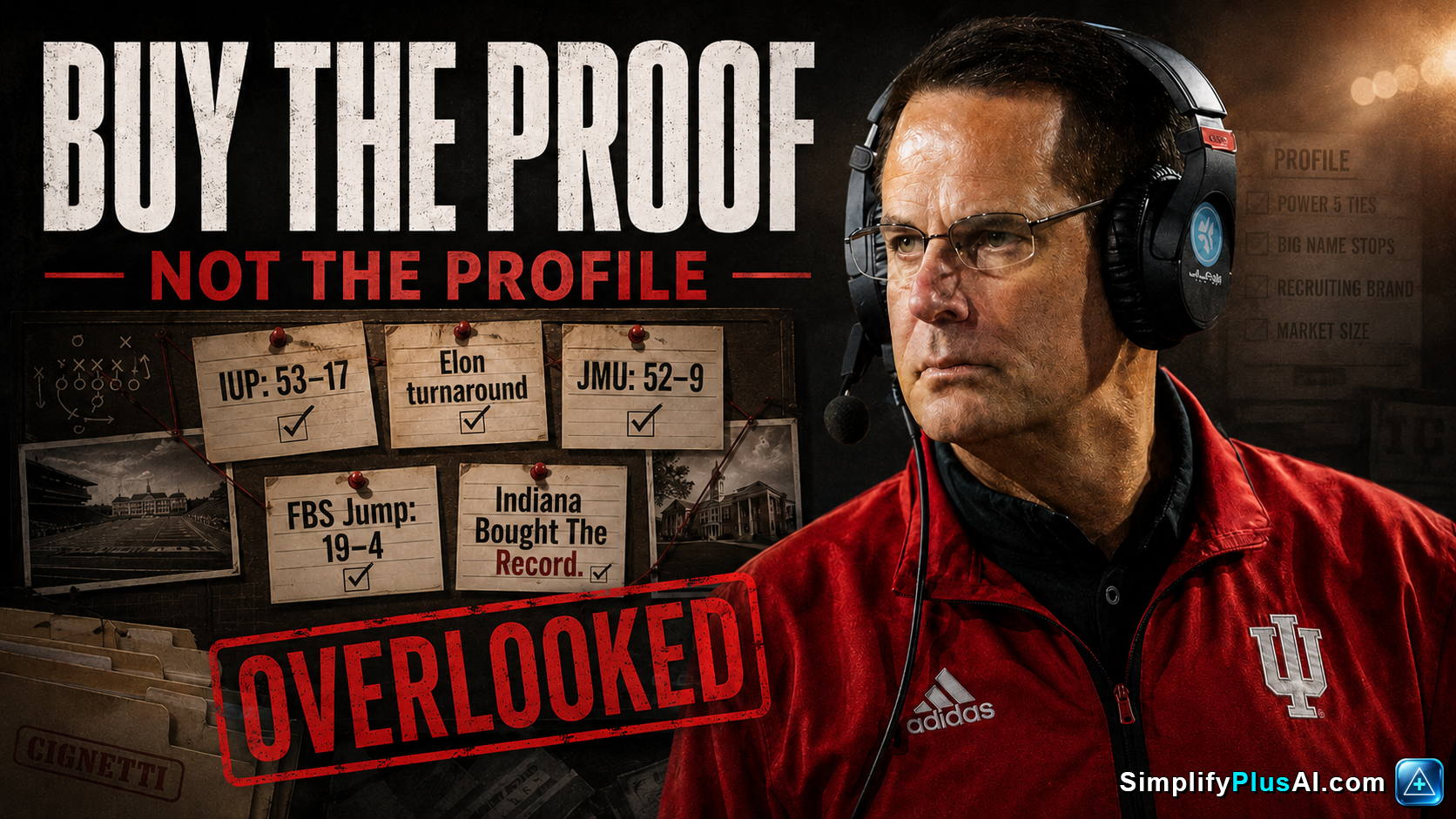
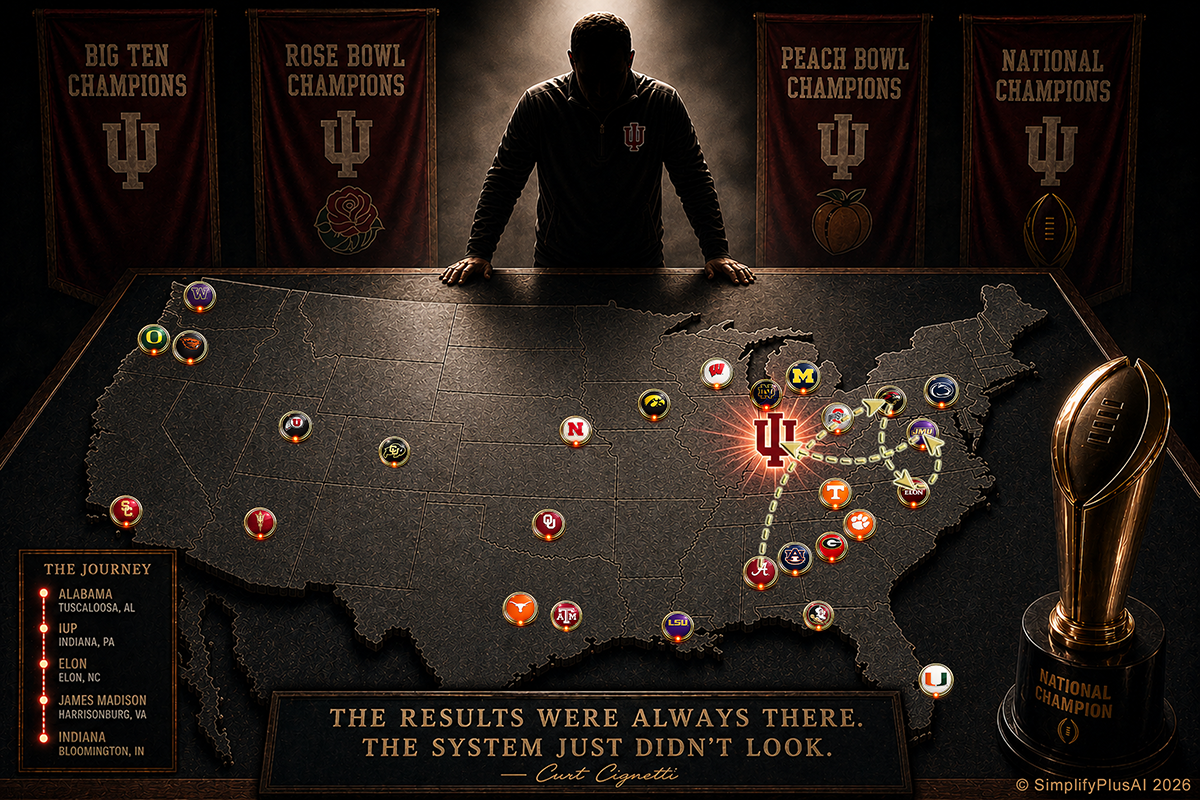
Curt Cignetti was never hidden. He was there in the record, in the staffs, in the recruiting classes, in the turnarounds, in the JMU transition, in the no-losing-season trail. College football did not need a private detective to find him. It needed a better pricing model.
The next time a school says it wants a winner, Cignetti’s path should be sitting on the desk before the search firm starts selling names. Not because every search has another Cignetti waiting in it, but because every search has the same risk: mistaking the easiest candidate to explain for the best candidate to hire.
Indiana found out what happens when a program stops shopping for the story and buys the evidence.
The rest of college football should be more embarrassed than surprised.





.png)
1. Best Cignetti Identity Comment — @outsideupside
“I win. Google me.” has to be the most gangster thing a head coach has ever said at a press conference.
Why it matters: This comment captures why Cignetti became such a magnetic figure. His confidence could have aged terribly, but the results turned it into proof.
2. Best Season Summary Comment — @traviscummings9178
“An undefeated regular season? Special. Making it to the national championship? Incredible. Winning said national championship? Amazing. Making Coach Cignetti smile? Priceless.”
Why it matters: This is a clean emotional summary of the whole arc: undefeated run, championship climb, final validation, and Cignetti’s controlled public personality.
3. Best Long-Suffering Fan Perspective — @KirkWiebe-f3d
“As an IU Alum who is 81 and who watched IU lose to USC at the Rose Bowl in 1968, the past two years have been absolutely wonderful. Huge thank you to the coaches and players of Indiana University.”
Why it matters: This comment gives the turnaround historical weight. It shows what the season meant to people who had lived through decades of Indiana football disappointment.
4. Best Hiring-Process Comment — @silentm999
“FYI: Indiana hired a tech company in Indianapolis to tell them who to hire. That company NAILED it and Im sure every college calls them first from now on.”
Why it matters: This comment speaks directly to the article’s deeper point about evidence, decision systems, and overlooked proof. It should be treated as public testimony rather than verified fact, but it is highly relevant to how fans interpreted the hire.
5. Best Changed-Mind Comment — @Later_Doober
“I admit that I was completely wrong about this team. I didn't believe at all that Indiana could win anything. I was one of those people a couple years ago during their first good season that was saying they haven't played anyone. Boy was I wrong about them and honestly it's really cool to see. I'm a believer now.”
Why it matters: This adds nuance because it is not just fan celebration or media mockery. It shows the public conversion process: skepticism, evidence, and eventual belief.