
Students Should Not Pay Premium Tuition to Press Play
ARTICLE OVERVIEW
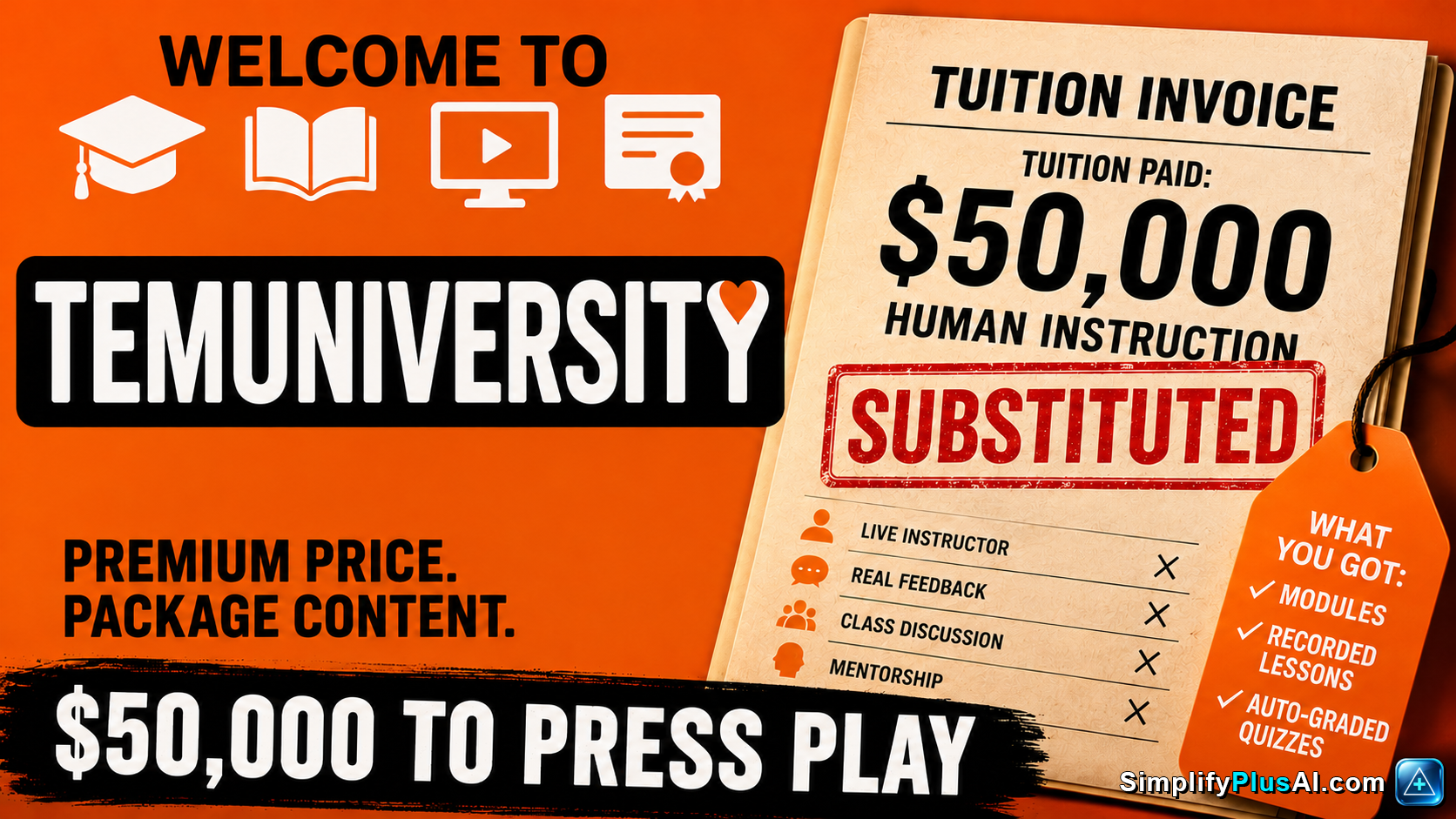
The warning sign is not that AI entered education. The warning sign is that colleges and universities are learning how to charge students for human teaching while delivering something much thinner: modules, recorded lessons, auto-graded work, canned feedback, and course shells that increasingly ask the student to press play and call it a class. The product failure is not technology. It is premium tuition for LMS delivery.
Online education, AI support, and digital course tools can all have legitimate uses. A learning management system can store the syllabus, organize assignments, hold readings, manage grades, and support communication. Flexibility matters, especially for working students and students who need access outside the traditional campus model. But that fair argument breaks down when the LMS stops supporting the class and quietly becomes the class. At that point, the student is no longer primarily buying teaching. They are buying organized content behind an institutional paywall.
The scale of that shift is already visible. Federal data showed distance education was already significant by 2012, and by fall 2024, 54.7% of students at degree-granting postsecondary institutions were enrolled in at least one distance education course. EDUCAUSE reported widespread LMS use years before AI became a household topic, with bachelor’s students increasingly using learning management systems in most or all courses. Meanwhile, tuition remains priced like a premium human product, with published 2025–26 tuition and fees reaching $11,950 for public in-state students, $31,880 for public out-of-state students, and $45,000 for private nonprofit four-year institutions. Those are not YouTube prices. They are prices attached to teaching, feedback, mentorship, standards, trust, and credential value.
AI can accelerate the problem because it gives institutions a smarter-sounding label for an older shortcut. “AI-enhanced learning” may help students when it complements real instruction, but it becomes dangerous when it masks the reduction of the human layer. UNESCO has warned that AI should complement, not replace, teachers, and learning research already shows that easier task completion is not the same as deeper understanding. A student can click through a module, pass an auto-graded quiz, post in a discussion board, and move a progress bar forward without receiving the kind of challenge, judgment, and feedback that premium education is supposed to provide.
That is the line students need to see clearly. If a college wants to sell low-cost modular content, it should price it like low-cost modular content. But it should not attach a life-altering debt burden to a glorified press-play system while still selling the promise of human teaching. The LMS can store the class. It can support the class. It can organize the class. But it cannot be the class. Once it becomes the class, the institution has changed the deal — and students should know that before they sign the loan, pay the bill, or trust the brand.

Complete In-Depth Analysis
The Product Failure
The warning sign is not that AI entered education. The warning sign is that colleges and universities are learning how to sell human teaching while delivering something much thinner: learning modules, recorded lessons, auto-graded work, canned feedback, and course shells that increasingly ask the student to press play and call it a class.

That is the product failure. Not technology. Not online access. Not every digital tool. The failure is charging students human-teaching prices for LMS delivery. A learning management system can hold a syllabus, assignments, readings, quizzes, videos, grades, and discussion boards. But when the LMS becomes the class, the educational product has changed. The student is no longer primarily buying teaching. They are buying organized content behind an institutional paywall.
That line has to be drawn now, before the language gets too slippery. Schools will call it digital transformation. Vendors will call it personalized learning. Administrators will call it flexibility. AI companies will call it intelligent tutoring. Some of that will be useful. Some of it will be real. But none of it should distract from the basic transaction. Students did not pay $50,000 to $100,000 to watch modules. They paid for education.
The best analogy is not a robot teacher. It is a restaurant scam. Imagine paying $250 to eat at a Gordon Ramsay restaurant and being served a frozen microwave dinner because the name is still on the building. The plate may be technically edible. The room may still look expensive. The receipt may still carry the famous name. But the product has been swapped. You paid for chef-level execution and got reheated industrial food.
That is what premium tuition for LMS-as-class feels like. The college brand is still there. The accreditation is still there. The professor’s name may still appear in the portal. The course may still count toward a degree. But if the actual experience is mostly modules, recorded lectures, automated quizzes, templated prompts, and thin instructor contact, then the school is not delivering the thing students were led to believe they were buying.
This is how colleges risk TEMU-ing themselves into a Temuniversity: premium legacy branding attached to a cheaper, thinner, mass-delivered substitute. The box still says higher education. The inside increasingly looks like commodity courseware.
The Infrastructure Is Already Mainstream
This is not speculation pulled out of nowhere. The infrastructure for this substitution has been building for more than a decade. In fall 2012, federal IPEDS data showed that 12.5% of students at Title IV institutions were enrolled exclusively in distance education courses, while another 13.3% were enrolled in some but not all distance education courses. By 2015, EDUCAUSE reported that 83% of students used a learning management system and 56% used one in most or all courses. In 2018, EDUCAUSE reported that 89% of bachelor’s students used an LMS for most or all courses. By fall 2024, NCES/IPEDS reported that 54.7% of students at degree-granting postsecondary institutions were enrolled in at least one distance education course.
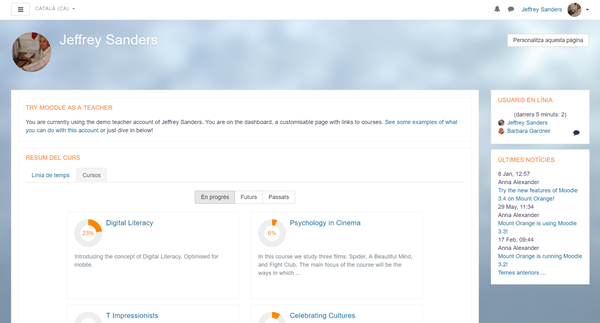
Those numbers do not prove that every online course is bad. They prove something more important for this argument: the delivery architecture is already mainstream. The LMS is not a side system anymore. It is the operating layer of modern college instruction. That means the question is no longer whether schools can move education into modules. They already can. The question is whether students can tell when the module has replaced the class.
That distinction matters because college tuition still carries a premium promise. The College Board reports average published 2025–26 tuition and fees of $11,950 for public four-year in-state students, $31,880 for public four-year out-of-state students, and $45,000 for private nonprofit four-year institutions. Those are not YouTube prices. They are not subscription-course prices. They are prices attached to institutional trust, expert instruction, human feedback, mentoring, standards, and credential value.
If a college wants to sell low-cost modular content, it should price it like low-cost modular content. There may be a place for that. But the honest version of that product is not the problem. The problem is pretending a premium human educational experience is being delivered when the actual class has been thinned into a portal.
AI Can Accelerate the Substitution
This is where AI can accelerate the slide, not because AI is automatically bad, but because AI gives institutions a smarter-sounding label for an older shortcut. Schools were already using LMS platforms, recorded content, auto-graded assessments, discussion boards, and prebuilt course shells before ChatGPT became a household word. AI now arrives as the upgrade layer: AI feedback, AI tutoring, AI grading support, AI course assistants, AI-generated practice, AI-generated summaries, AI-generated explanations. The danger is that “AI-enhanced learning” becomes the new language for reducing the human layer while keeping the premium bill.

Even the responsible policy language points in the opposite direction. UNESCO has said AI tools should complement, not replace, the vital roles and responsibilities of teachers. The U.S. Department of Education has warned that AI in education must be handled with attention to opportunity, risk, and unintended consequences. That is the correct standard. AI can support education. It should not be used as cover for automated substitution.
Completion Is Not Learning
The learning evidence also warns against confusing completed work with learned work. A PNAS study on GPT-4 in high-school math found that students with GPT-4 access performed better during practice, but when access was later removed, students who had used the base GPT tool performed worse than students who never had access. That finding does not mean AI has no place in learning. It means friction matters. Guardrails matter. Human judgment matters. A system that helps students complete tasks can still weaken the development of actual ability if it removes the struggle that builds understanding.
The same danger exists with LMS modules. A student can complete the module. A student can click through the lecture. A student can post in the discussion board. A student can pass the auto-graded quiz. The dashboard can show progress. The institution can record activity. But activity is not the same as education. Progress bars are not mentorship. Completion is not understanding.
The Gold-for-Paper Problem
That is why this is really a gold-for-paper problem. Students hand over something real: money, debt capacity, years of life, opportunity cost, and trust. In return, they are supposed to receive something real: teaching, challenge, judgment, feedback, standards, and a credential backed by meaningful development. But when the human product is thinned into modules, the school keeps the gold while the student receives something that may look official but feel increasingly diluted.

This is not only a student complaint. It is a reputation problem for universities themselves. The more colleges normalize LMS-as-class delivery at premium prices, the more they train students to ask a brutal question: why am I paying this much for something that resembles what I can learn from YouTube, podcasts, tutorials, open courseware, and low-cost online programs?
The Market Is Moving Toward More Automation
That question will not stay theoretical. The LMS market is projected to keep growing. Research and Markets estimates the global LMS market at $26.8 billion in 2025 and projects it to reach $100.6 billion by 2034. The AI-in-education market is also projected to expand sharply, with Grand View Research estimating growth from $8.3 billion in 2025 to $57.2 billion by 2033. Market forecasts are not destiny, but they show where the incentives point. Vendors want to sell more platforms. Institutions want scale. Faculty are overloaded. Students want flexibility. Administrators want efficiency. That combination will keep pushing education toward more modules, more automation, more AI support, and more pressure to reduce expensive human teaching labor.
The next five years will likely normalize AI inside the LMS. Students will see more AI tutors, AI-generated practice, AI writing feedback, AI quiz support, AI advising tools, and AI course assistants. Some of it will help. Some of it will support students who otherwise would not get enough attention. But the risk will grow fastest in high-enrollment general education courses, online degree-completion programs, and institutions under financial pressure. Those are the places where the temptation to scale content while thinning human instruction will be strongest.
The next ten years may split the market. Premium institutions will increasingly sell human contact as a luxury feature: small seminars, real feedback, mentor access, live discussion, research opportunities, and faculty attention. Lower-cost institutions may openly sell flexible, module-heavy pathways. The most dangerous zone will be the middle: schools charging premium prices while delivering commodity learning shells.
The Line Students Should Not Let Institutions Cross
That is where the warning belongs. Students should get their money’s worth or refuse the product. If a school is charging premium tuition, the student should receive premium human instruction. That means real teaching, real feedback, real challenge, real mentorship, real standards, and real accountability. If the course is mostly a module sequence, the price should reflect that. Do not attach a life-altering debt burden to a glorified “press play” system and pretend the student received a full educational product.
Online education, AI support, and digital course organization can all have legitimate uses. But none of them justify charging Gordon Ramsay prices for a microwave plate. None justify taking the student’s gold and handing back devalued paper. And none justify replacing the class with the LMS while still selling the promise of human teaching.
The line is simple.
The LMS can store the class.
The LMS can support the class.
The LMS can organize the class.
But the LMS cannot be the class.
Once it becomes the class, the institution has changed the deal. And students should know that before they sign the loan, pay the bill, or trust the brand.
Sources and Image Credits
- NCES — Distance education participation, fall 2024
- College Board — Trends in College Pricing and Student Aid 2025
- UNESCO — AI should complement, not replace, teachers
- U.S. Department of Education — Artificial Intelligence and the Future of Teaching and Learning
- PNAS — Generative AI without guardrails can harm learning
- Research and Markets — Learning Management System Market
- Grand View Research — AI in Education Market
- Moodle dashboard image — WikiPrisma, CC BY-SA 4.0
- Professor teaching image — Harrison Keely, CC BY 4.0
- Online education image — Helgi Halldórsson, CC BY-SA 2.0
- Laptop or Book image — Dejan Krsmanovic, CC BY 2.0
Corrections and Accuracy
If you notice a factual error or inaccuracy in this article, please notify us at contact@simplifyplusai.com. We will review the information and update the article where appropriate.


.png)