
The NFL Deal Everyone Thought Was Insane and Everyone Eventually Copied
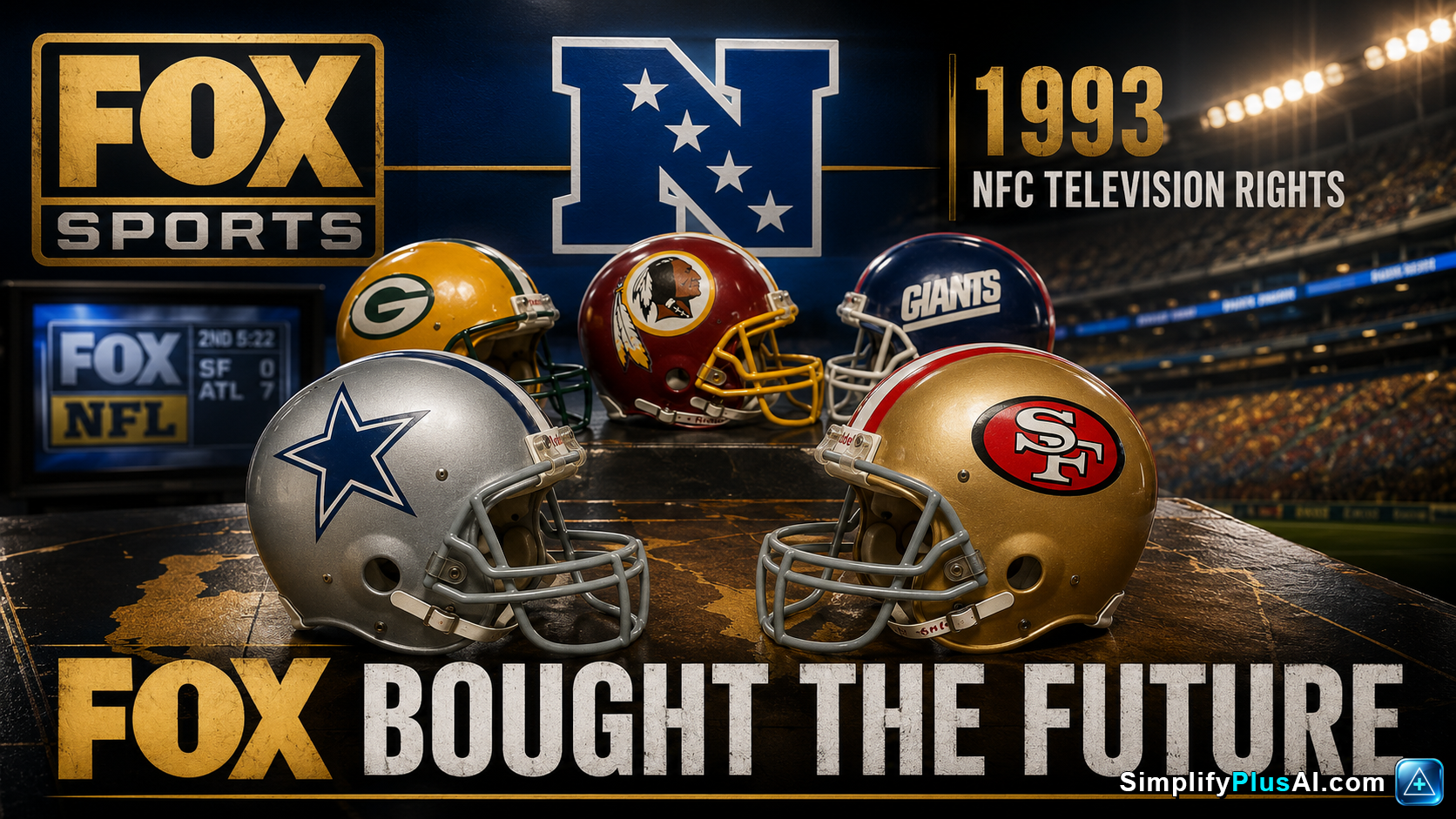
Article Overview
Rupert Murdoch’s own executives had calculated what Fox could reasonably pay for the NFL’s NFC television package. Murdoch rejected the number. He believed the NFL was using Fox to raise CBS’s price, so a financially responsible offer would accomplish nothing; Fox needed a bid large enough to make CBS “choke.” In December 1993, Fox committed approximately $1.58 billion over four years—about $395 million annually and roughly $100 million more per year than CBS was prepared to offer. Murdoch knowingly crossed the package’s conventional break-even point because he was not merely buying football broadcasts. He was buying the national legitimacy Fox could not build quickly enough on its own.
CBS’s caution was understandable. The established networks already feared that escalating sports-rights fees could exceed the advertising revenue generated by the games, and CBS had carried professional football for decades while paying about $265 million annually for the NFC. Fox, however, had more to gain than an incumbent network had to protect. It needed stronger affiliates, weekly audience habits, advertiser credibility, elite production talent and a permanent position beside ABC, CBS and NBC. The NFC supplied major teams, major markets and compulsory Sunday viewing. Fox paid more because it was valuing the effect of football on the entire network, while CBS was still largely valuing the profitability of the football package itself.
The evidence arrived quickly. Fox recruited John Madden, Pat Summerall and experienced CBS production personnel, built Fox Sports around the NFL and used the games to strengthen its affiliates and promote the rest of its schedule. CBS lost more than Sunday ratings; it lost lead-in audiences, younger viewers, promotional leverage and important stations. Four years later, CBS returned by paying roughly $500 million annually for the AFC—more than it had refused to pay for the stronger NFC package in 1993—while total NFL rights climbed from a little over $1 billion annually in the first Fox cycle to approximately $2.6 billion beginning in 1998. NBC was pushed out, judged the new NFL price excessive and then joined Vince McMahon in creating the XFL because having replacement football seemed preferable to having none. The XFL collapsed after one season, just as the USFL had earlier challenged the NFL, proved monopolistic conduct in court and received a judgment of only $3. Those failures established the scarcity beneath Fox’s gamble: networks could create football programming, but they could not easily recreate the NFL.
Fox’s deal also helped enlarge the economic pool that transformed professional sports. The 1993 labor settlement created modern free agency and the salary-cap structure; Fox did not create either one. But national television money became the guaranteed revenue engine feeding that system. As rights payments expanded, shared league revenue, salary caps, signing bonuses and available player compensation expanded with them. The larger consequence was a new valuation model that moved from broadcast television into cable, satellite and streaming. ESPN used the NFL to protect cable carriage value, DirecTV used Sunday Ticket to attract and retain subscribers, Amazon uses Thursday Night Football to strengthen Prime and turn Prime Video into live television, and Netflix uses NFL events to build appointment viewing, advertising credibility and global live-event capability. Each company followed the principle Fox proved: the games can be worth more than the money earned during the games.
The supposedly reckless bid succeeded because the NFC package was simultaneously overpriced television programming and underpriced corporate transformation. Fox became a permanent major network, CBS paid heavily to return, NBC eventually came back with Sunday Night Football, rights fees became the leagues’ central growth engine, and technology companies entered auctions once controlled by three broadcast networks. Amazon and Netflix are not paying only for football; they are paying for where audiences go, when they arrive, how long they remain and what the platform becomes once they are there. The full account below traces how one bid designed to make CBS choke broke television’s old order, expanded the money available to leagues and players, and created the sports-rights playbook the modern media industry still follows.

Complete In-Depth Analysis
Rupert Murdoch’s own people had already calculated what Fox could reasonably pay for the NFL’s National Football Conference package. Then Murdoch rejected the number.
The conventional bid would not work, he believed, because the NFL was using Fox to drive up CBS’s price. If Fox wanted the NFC badly enough to pry it away from a network that had carried professional football for decades, it could not merely submit the most financially responsible offer. Fox executive Chase Carey later described the necessary figure as one large enough to make CBS “choke.” Fox offered approximately $395 million per year—roughly $100 million more than CBS’s final position—and committed about $1.58 billion over four years. (The Ringer)
It looked reckless because nearly everyone was measuring the wrong purchase.
CBS saw an expensive package of football games. Fox saw the missing infrastructure of a national television network. Murdoch was willing to lose money on the games themselves if the NFL could bring Fox major-market affiliates, weekly audience habits, advertiser credibility, elite broadcasting talent, promotional power and permanent standing beside ABC, CBS and NBC.
The bid did more than move the NFC from one channel to another. It changed the accepted reason for buying sports. A broadcaster no longer had to prove that advertising sold during the games would repay the rights fee. Premium sports could justify their price through what they built around the games: a network, a cable bundle, a satellite service, a subscription platform or an entire commercial ecosystem.
Amazon and Netflix are operating inside that logic today.
Fox did not simply outbid CBS for football. It changed what football was allowed to be worth.
Before Fox, the Networks Controlled the Table
Sports television did not begin in 1993, and neither did competitive bidding. The NFL had sold pooled national rights for decades. ABC turned Monday Night Football into prime-time entertainment. NBC used its AFL agreement to help stabilize a rival league before the AFL–NFL merger. ESPN entered the NFL business in the 1980s and proved that cable could also carry premium professional football.
By the 1990–1993 contract cycle, the NFL was already receiving approximately $900 million per year across ABC, CBS, NBC, ESPN and TNT. The established networks knew that football attracted enormous audiences, supported local affiliates and promoted the rest of their schedules. They also knew that rising rights fees could overwhelm the advertising revenue generated by the telecasts themselves. Academic reconstructions of the period show that the networks had reason to believe they had paid too much under the previous agreements. (Vanderbilt University)
CBS’s caution was therefore not irrational. It had been paying about $265 million annually for the NFC and did not believe the next package justified anything close to Fox’s eventual bid. From the standpoint of traditional program accounting—rights cost, production expense and advertising return—the numbers were difficult to defend.
Fox’s difference was not that it had discovered football was popular. Its difference was that it had more to gain.
Fox had launched as a broadcast network in 1986, but it remained a distant outsider. Many of its stations operated on weaker UHF channels. Its distribution could not match the Big Three, and its identity came largely from unconventional entertainment programming rather than national institutions. It had successful shows, but it did not yet possess the weekly programming that would force millions of Americans to find the Fox affiliate in their city.
Murdoch understood that the NFL could solve several problems at once.
The NFC contained many of the league’s largest brands and television markets: the Dallas Cowboys, New York Giants, Chicago Bears, Philadelphia Eagles, San Francisco 49ers and Washington franchise. NFC teams had won nine consecutive Super Bowls entering the negotiations. Fox was not buying a generic collection of games. It was buying the league’s most valuable Sunday-afternoon neighborhood. (The Ringer)
The Overpayment Was the Strategy
Murdoch’s decision is easy to misunderstand because the word overpayment normally implies error.
Fox almost certainly did overpay relative to the direct economics of the first contract. The network had to build a sports operation, recruit production personnel, purchase equipment, sell unfamiliar affiliates to national advertisers and deliver NFL-quality broadcasts almost immediately. The rights fee alone was substantially above the price CBS was prepared to pay.
But Fox did not accidentally wander past its break-even point. Murdoch crossed it deliberately.
The question inside Fox was not simply whether four years of NFL advertising could recover $1.58 billion. The question was what it would cost to make Fox a fully recognized fourth network by any other method.
Buying CBS or NBC would have required vastly more capital and may not have been possible. Building comparable affiliate strength, audience loyalty and institutional credibility one program at a time could have taken years without ever succeeding. The NFC package offered a compressed path.
Fox paid an extraordinary price because an ordinary price would have produced an ordinary outcome: CBS would match it, retain the games and continue treating Fox as a negotiating instrument.
The bid needed to hurt.
CBS declined. Fox had its opening.
Fox Did Not Buy Games. It Bought Sundays.
The NFL gave Fox something scripted entertainment rarely could: compulsory weekly behavior.
Viewers might sample a new drama if marketing persuaded them. Football fans did not need persuasion to watch the Cowboys, Giants or 49ers. Their loyalty to the teams pulled them into Fox every Sunday, taught them where the channel was and exposed them to promotions for the network’s prime-time schedule.
That audience flow had value far beyond the commercials shown during the game. NFL broadcasts strengthened pregame shows, postgame shows, local news, Sunday-night programming and the network’s appeal to male viewers and major advertisers. Football became a recurring front door into everything else Fox sold.
The deal also transformed Fox’s relationship with local stations. In 1994, Fox formed a major alliance with New World Communications that moved a group of prominent stations—many previously aligned with CBS—to Fox. The NFC rights made Fox affiliates dramatically more valuable in major football markets, while the affiliate switches improved the reach and credibility of Fox’s entire schedule.
The feedback loop was immediate: football made Fox distribution stronger, and stronger distribution made every Fox program more valuable.
Fox then began stripping CBS of the people who made its football coverage feel authoritative. John Madden and Pat Summerall moved to Fox, followed by producers, directors and other experienced personnel. Terry Bradshaw became part of the new pregame operation. Fox was not trying to invent credibility entirely from scratch; it purchased rights to the product and recruited much of the human machinery that already knew how to present it. (The Ringer)
The network also pushed the visual language of football forward. The permanent score-and-clock graphic—eventually known as the Fox Box—helped viewers understand the game without waiting for announcers or occasional updates. Fox’s production carried more energy and treated football as both competition and entertainment.
The old networks had regarded Fox as an unserious newcomer.
Within one season, Fox Sports existed because the NFL required it to exist.
CBS Learned What the Games Had Been Supporting
The cleanest evidence of the NFL’s value came from the network that lost it.
CBS did not merely lose Sunday-afternoon ratings. It lost strong lead-in audiences, younger male viewers, promotional inventory and leverage with affiliates. The network’s broader decline had other causes, but former CBS executives later described losing the NFL as a disaster that weakened programming around the games and accelerated station defections. (The Ringer)
That damage revealed what conventional accounting had failed to capture.
The football package had never been only a football package.
CBS had evaluated the cost of keeping it. Fox evaluated the value of owning it. Neither side fully priced the cost of CBS losing it until the games were gone.
Four years later, CBS returned to the NFL by paying approximately $4 billion over eight years for the AFC package previously held by NBC. That worked out to roughly $500 million per year—more than CBS had refused to pay for the more prestigious NFC rights in 1993. (Time)
That was the market’s verdict on Murdoch’s allegedly insane bid.
CBS did not prove Fox wrong by remaining disciplined and thriving without football. It came back at a higher price after experiencing what absence cost.
The Real Price Explosion Came Next
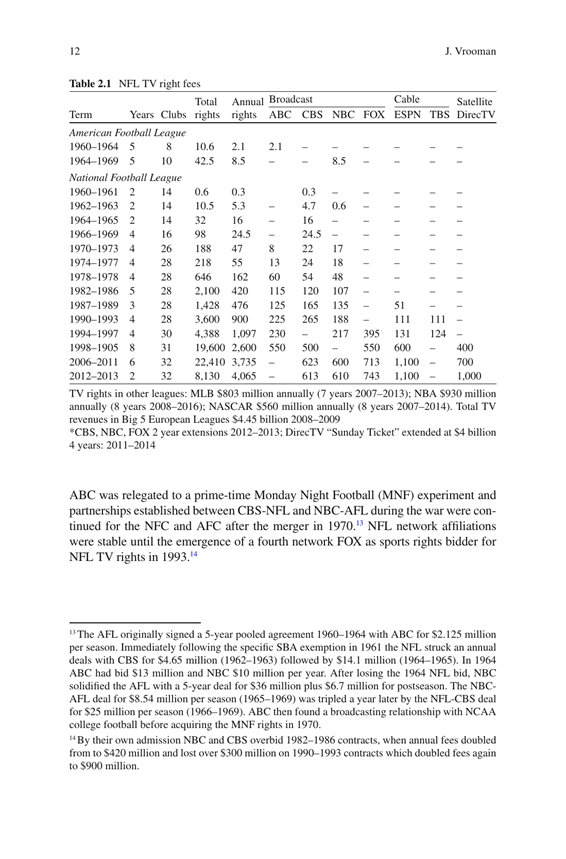
The Fox deal increased the NFL’s total annual national-rights revenue, but it did not instantly double the entire market. Annual payments rose from approximately $900 million in the 1990–1993 cycle to a little over $1 billion during the 1994–1997 agreements.
The delayed explosion came in the next auction.
For the 1998–2005 cycle, total annual NFL media rights climbed to approximately $2.6 billion. Fox retained the NFC for roughly $550 million per year. CBS paid approximately $500 million annually to return with the AFC. ABC committed heavily to retain Monday Night Football. ESPN and DirecTV became increasingly important parts of the national distribution structure. (Vanderbilt University)
The old stability had disappeared.
Before Fox, the Big Three could bargain with the expectation that the league needed established broadcast networks as much as the networks needed football. After Fox, every incumbent knew that the NFL could move a major package to an aggressive outsider—and that losing the games might damage the entire network.
The bidding price now included two calculations:
What are the rights worth if we win?
What happens to us if we lose?
Fox had transformed the second question.
NBC Refused the New Price—and Tried to Build Its Own Football League
NBC became the next network to learn what exclusion felt like.
When CBS bought the AFC rights in 1998, NBC was pushed out of the NFL after decades of carrying professional football. NBC Sports president Dick Ebersol publicly argued that the winning networks had paid prices likely to produce enormous losses. From a direct-profit standpoint, he may have been right. (Variety)
But refusing the rights created a different problem: NBC no longer had football.
Rather than accept that absence, NBC entered a 50–50 partnership with Vince McMahon’s World Wrestling Federation to create the XFL. The new league launched in 2001, immediately after the NFL season, with NBC functioning not merely as a broadcaster but as an owner. (ESPN and contemporary reporting)
That decision is one of the strongest demonstrations of what NFL rights had become.
NBC considered the market price too high, then committed money, prime-time space, production resources and its reputation to manufacturing a substitute league from scratch. A major network would rather help invent professional football inventory than remain without football altogether.
The XFL’s debut generated enormous curiosity, but the product could not sustain it. Game quality was uneven, the presentation leaned too heavily on wrestling-style spectacle, ratings collapsed and advertisers had to be compensated. The league folded after one season. NBC and the WWF each reported losses of roughly $35 million. (ESPN)
The XFL did leave a production legacy. Its aggressive use of field-level access and overhead camera work influenced later sports broadcasting. But commercially, it demonstrated something Fox had understood from the beginning: a network did not need merely football. It needed authentic, scarce NFL football, carrying established teams, elite players, history and inherited fan loyalty.
NBC tried to manufacture a substitute after refusing the NFL’s price.
The substitute proved why the real rights were so expensive.
The USFL Had Already Shown How Hard the NFL Was to Replace
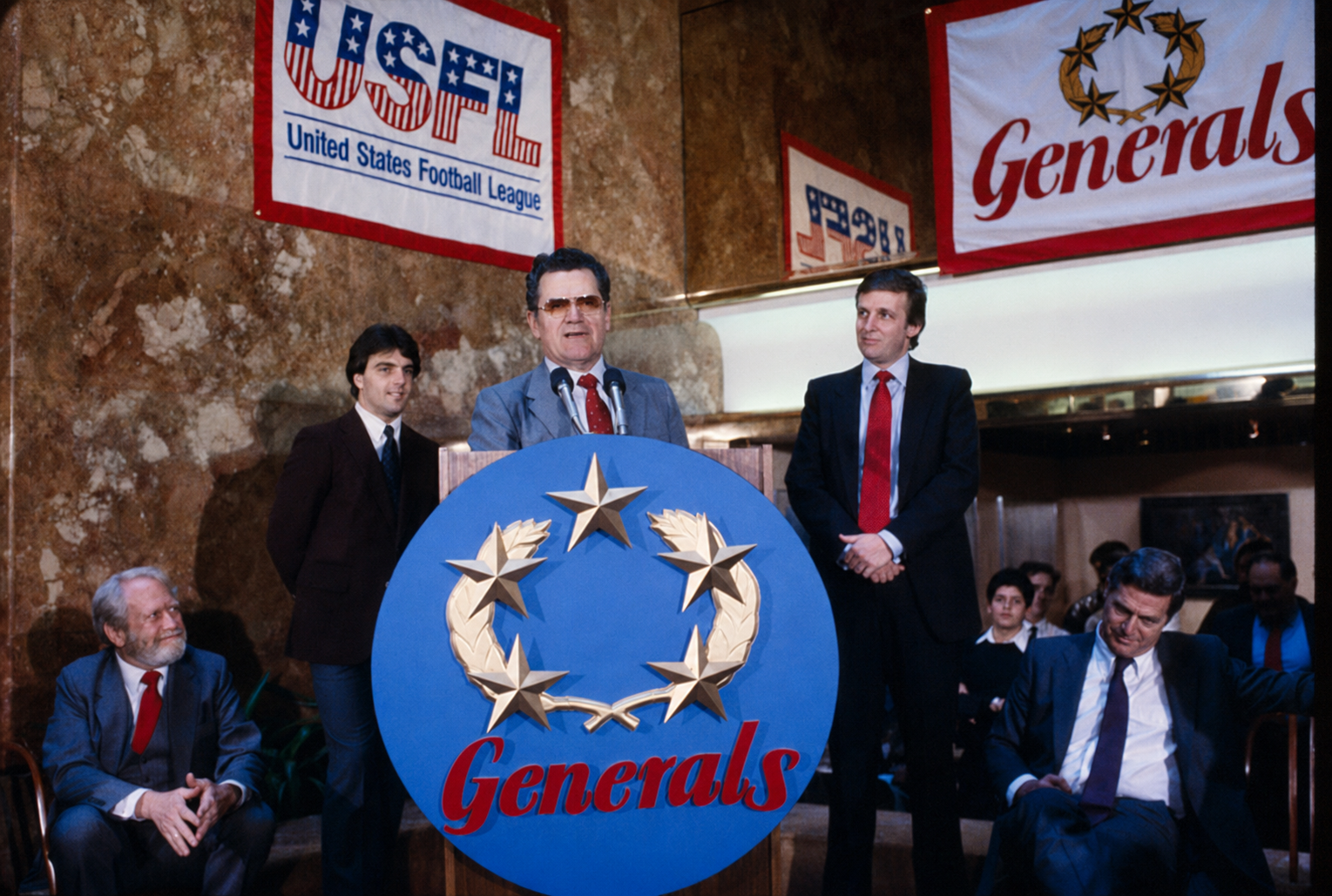
The original United States Football League provides an earlier warning.
The USFL played spring football from 1983 through 1985 and, for a time, established a plausible position beside rather than directly against the NFL. It attracted major talent, including Herschel Walker, Steve Young, Jim Kelly and Reggie White. It had national television exposure and created meaningful interest by offering professional football during the NFL offseason.
The league’s strategic fracture came when influential owners, most notably Donald Trump, pushed it away from spring differentiation and toward direct fall competition. The move was tied to a belief that confrontation—and an antitrust lawsuit—could force an NFL merger, settlement or enormous damages award.
ESPN’s 2009 30 for 30 documentary Small Potatoes: Who Killed the USFL?, directed by Mike Tollin, reconstructs that rise and collapse through archival footage and interviews. (ESPN)
The legal result became one of the most absurd victories in American sports.
A jury found that the NFL had willfully acquired or maintained monopoly power in major-league professional football and that its conduct had injured the USFL. But the jury awarded only $1 in damages. Antitrust law trebled the amount to $3. (Law Resource)
The USFL technically won and still received almost nothing.
The tiny award reflected the jury’s apparent conclusion that the NFL had behaved unlawfully but that the USFL had caused much of its own destruction. By abandoning the spring position that gave it room to operate, moving toward direct fall competition and staking survival on a courtroom windfall, the league surrendered its best strategic advantage.
The USFL and XFL belong in the Fox story because together they establish the scarcity underneath the television market.
The USFL showed how difficult it was to challenge the NFL directly, while the XFL showed how difficult it was to manufacture a substitute after a network lost access. Fox chose the third path: pay the price for the irreplaceable product and use it to build something larger. That was the path that worked.
Television Money Became the League’s Economic Engine
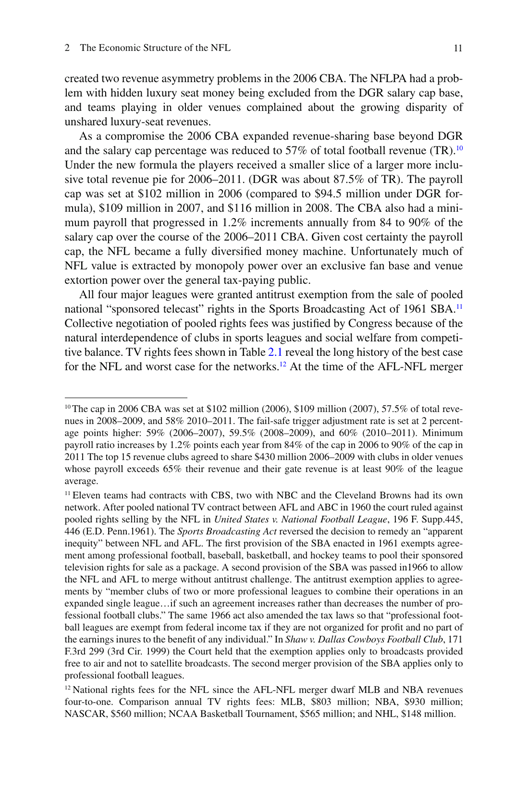
The importance of the Fox bid cannot be separated from what media revenue did to the NFL’s financial structure.
National television money is unusually powerful because the league negotiates collectively and distributes major national revenues across its teams. That arrangement gives clubs in smaller markets access to the same core national broadcast income as teams in New York, Chicago or Los Angeles. The guaranteed revenue base supports competitive stability, franchise values and the ability of every team to participate in the player market.
The Fox deal also arrived at nearly the same moment as the NFL’s modern labor system.
The 1993 collective bargaining settlement expanded meaningful free agency and established the salary-cap framework that took effect in 1994. The first cap available for player salaries was approximately $34 million per team, depending on whether benefits are included in the quoted figure. (Spotrac)
Fox did not invent free agency or independently create the salary cap. Those developments came from litigation, negotiation and the NFL Players Association’s struggle to secure player mobility and a negotiated share of league economics.
But television revenue supplied the expanding pool.
Under later collective bargaining agreements, player compensation became directly tied to league revenue. When national media contracts grow, the salary cap and required cash spending generally rise with them. Television money therefore does not remain confined to network balance sheets or owners’ accounts. A negotiated portion enters the labor market through larger caps, signing bonuses, minimum salaries and available contract space.
The economic sequence is straightforward: broadcasters pay the league, the league shares national revenue among its clubs, and collective bargaining determines the portion available to players.
Free agency allows players to compete for that money.
Without television growth, labor rights alone could not manufacture the revenue required for modern contracts. Without labor leverage, television growth would not automatically guarantee players their present share.
Both were necessary.
The salary cap has since grown from roughly $34 million in 1994 to more than $300 million per club in 2026. Many forces contributed—league expansion, sponsorship, stadium revenue, digital products, gambling partnerships and extraordinary growth in the NFL’s popularity—but national media rights remain the central guaranteed engine beneath the system. (The Wall Street Journal)
The Fox bid did not place every future dollar in players’ pockets. It helped accelerate the auction mechanism that kept enlarging the pool from which those salaries became possible.
ESPN and DirecTV Extended the Fox Logic
Once Fox demonstrated that football could be valued as platform infrastructure, the same logic moved beyond broadcast television.
ESPN could pay for the NFL through more than game advertising. Premium football strengthened the entire cable network, supported high subscriber fees, protected ESPN’s place inside the bundle and promoted its broader programming. By the late 1990s, cable money had become central to the NFL’s rights structure. In 2006, Monday Night Football moved from ABC to ESPN under an agreement valued around $1.1 billion annually. (Vanderbilt University)
DirecTV used NFL Sunday Ticket even more directly as a platform-building weapon. Out-of-market access gave committed football fans a powerful reason to choose satellite service and remain subscribed. Sunday Ticket did not have to justify its price only through individual game purchases. It helped make the entire DirecTV product essential to a valuable group of customers.
Fox used the NFL to build a network, ESPN used it to protect a cable empire, and DirecTV used it to sell a distribution system. The game remained the same while the surrounding unit of value kept expanding.
Amazon Bought the Fox Strategy in Digital Form
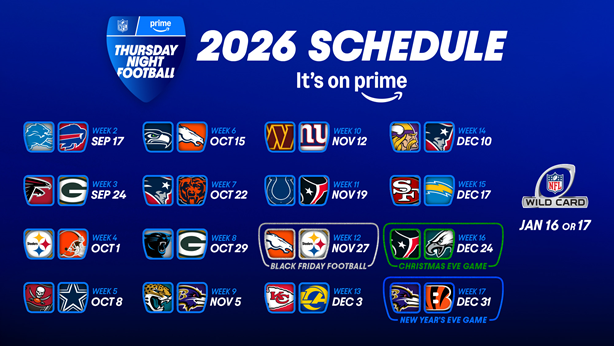
Amazon’s exclusive Thursday Night Football package is the clearest modern continuation.
The NFL’s long-term media agreements through the 2033 season preserved relationships with CBS, Fox, NBC and ESPN/ABC while making Amazon the exclusive national home of Thursday Night Football. It was the first season-long national NFL package awarded exclusively to a streaming service. (NFL.com)
Amazon is not limited to the economics of a television network. It can evaluate the NFL through Prime subscriptions, membership retention, advertising, Prime Video engagement, Fire TV usage, e-commerce behavior and the broader habit of remaining inside Amazon’s ecosystem.
That is Murdoch’s calculation enlarged by technology.
A Thursday-night broadcast might appear extraordinarily expensive if measured only by the advertising sold inside three hours of football. The price looks different if the games make Prime memberships more valuable, turn Prime Video into a weekly destination and provide Amazon with premium advertising inventory attached to one of the few remaining mass live audiences.
Fox used NFL Sundays to teach the country that Fox was a real network; Amazon used Thursday nights to teach subscribers that Prime Video was real television. The commercial details differ, but the strategic grammar is nearly identical.
Netflix Is Buying Appointment Behavior
Netflix represents the next stage.
Its original advantage was freedom from the schedule. Subscribers watched entertainment whenever they wanted, often consuming an entire series in days. Live football demands the opposite behavior: viewers must appear at a specific time or lose part of the event’s value.
That appointment habit is strategically important to a company building an advertising business and expanding into live programming.
Netflix’s first NFL Christmas games in 2024 averaged more than 30 million global viewers, with each game drawing a massive U.S. audience. The broadcasts demonstrated that a streaming platform could deliver NFL-scale live viewership across global infrastructure. (Netflix)
Netflix has since expanded its relationship. Its announced 2026 schedule includes a Week 1 game in Australia, a Thanksgiving Eve game, Christmas games and a Week 18 matchup, while an extended agreement reaches through the 2029–2030 season. (Netflix)
Netflix has not yet made a commitment equivalent to Fox taking the entire NFC or Amazon owning a full weekly package. Its NFL inventory remains more selective.
But the reason to buy it comes from the same lineage.
Netflix is not acquiring only several football games. It is acquiring real-time audience concentration, global cultural conversation, advertising credibility, live-production experience and another reason for subscribers to think of Netflix as more than an on-demand library.
Fox bought network legitimacy. Netflix is buying live-event legitimacy.
The Deal Created a New Kind of Free Market
Fox did not create competition for sports rights from nothing. The NFL had bargained with networks for decades, and previous challengers had already expanded the market.
What Fox broke was the comfortable assumption that the rights belonged naturally to a small group of incumbent broadcasters evaluating them through similar economics.
Fox entered with a different objective and therefore a different willingness to pay. Its success invited every later platform with adjacent strategic interests to join the auction:
Cable companies seeking carriage leverage
Satellite providers seeking subscribers
Telecom companies seeking bundle value
Technology firms seeking ecosystem engagement
Streaming services seeking appointment viewing
Advertising platforms seeking concentrated live audiences
Each new bidder gave leagues more leverage. Each distribution technology created additional packages the league could separate and auction. Sunday afternoon, Sunday night, Monday night, Thursday night, out-of-market games, international games, Christmas, Black Friday and digital rights became distinct commercial surfaces.
The NFL’s scarcity remained fixed while the number of companies that could profit indirectly from owning a piece of it continued to grow.
That is how prices escaped the old network model.
Fox did not merely submit the highest bid inside an existing market. It widened the market.
The Industry Eventually Admitted Fox Was Right
The easiest way to judge the deal is to look at what followed.
Fox became a permanent major network rather than a transitional fourth-place experiment. Fox Sports expanded far beyond the NFL into baseball, NASCAR, college sports, soccer and other properties. The network continues to hold the NFC package more than three decades after the original gamble under the NFL’s current long-term agreements. (NFL.com)
CBS paid heavily to return.
NBC, after refusing the new price and failing to build a viable substitute through the XFL, eventually returned to the NFL in 2006 with Sunday Night Football. That program became one of the most dominant prime-time properties in American television. (AP News)
Annual NFL media-rights revenue more than doubled in the first major negotiation after Fox’s arrival and has continued climbing into multibillion-dollar territory. Amazon now owns a national weekly window. Netflix carries NFL events to a global streaming audience. Player salary capacity has grown alongside the league’s revenue machine.
The Fox package may not have produced a conventional direct profit during its first four years. That question is almost beside the point.
Fox’s objective was not to make one programming block profitable. It was to make Fox unavoidable.
The deal succeeded so completely that the strategy no longer appears radical. Every modern platform now understands that the most valuable sports rights can be worth more than the money generated during the game because they reshape consumer behavior around the entire company.
That insight was not obvious when Murdoch told his executives to move beyond the break-even number.
It is obvious now because he did.
Fox Changed the Unit of Value
CBS was not foolish to see an expensive football package. The games were expensive, and matching Fox might have produced painful direct losses.
Murdoch’s advantage was that he understood the package could be two things at once: overpriced television programming and underpriced corporate transformation.
The USFL tried to challenge the NFL and technically won a monopoly case for $3. NBC lost the NFL and tried to manufacture another football league. Fox simply bought the real thing at a price everyone else thought was irrational.
That purchase gave Fox the audience, distribution, talent and credibility it could not otherwise obtain. It taught later bidders that premium sports could build platforms rather than merely fill schedules. The resulting competition enlarged league revenue, supported the modern salary system and ultimately drew cable, satellite and streaming giants into the same auction.
Amazon and Netflix are not paying only for football games; they are paying for where viewers go, when they arrive, how long they stay and what the platform becomes once they are there.
Fox recognized that value before the rest of the industry had language for it.
The bid looked crazy because the games alone were not worth $395 million per year.
The games were never the entire purchase.
Sources
- The Ringer — How Fox’s 1993 NFL deal changed television
- Vanderbilt University — NFL media-rights economic history
- TIME — NBC and the 1998 NFL rights loss
- Variety — NBC’s response after losing NFL rights
- ESPN — The original XFL shuts down
- ESPN 30 for 30 — Small Potatoes: Who Killed the USFL?
- United States Court of Appeals — USFL v. NFL
- NFL — Long-term media agreements through 2033
- Netflix — NFL Christmas Day audience results
- Netflix — Current NFL game slate and partnership
- Associated Press — NBC Sunday Night Football’s long-term success
Corrections and Accuracy
If you notice a factual error or inaccuracy in this article, please notify us at contact@simplifyplusai.com. We will review the information and update the article where appropriate.


.png)